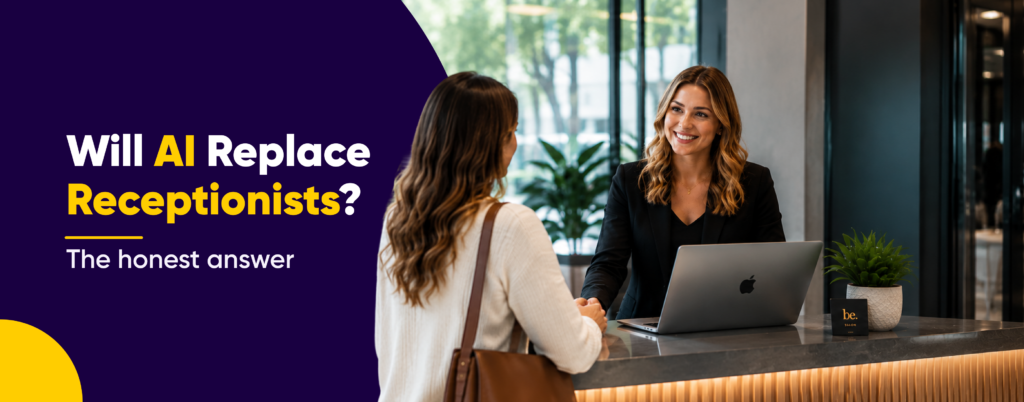
No, AI is unlikely to completely replace salon receptionists in 2026. Instead, many salons are using AI to handle repetitive tasks like answering calls and booking appointments while staff focus on in-person customer service and complex client needs. The real story is about smarter, not fewer, front desk operations.
Salon owners across the country are asking this question more than ever and for good reason. Labor shortages have made it harder to keep reliable front desk staff. Customer expectations are rising, with clients wanting instant responses at 10 PM on a Sunday. And operational costs keep climbing. If you’re managing a salon in 2026, you’ve probably already felt these pressures firsthand.
In this blog, you’ll get a straight answer on what AI can actually do at the front desk, what it still can’t do, and how smart salon owners are blending both to run better businesses.

Will AI Completely Replace Salon Receptionists?
No not in 2026, and probably not anytime soon. AI is a strong tool for handling volume-based, repetitive tasks. But running a salon front desk involves emotional intelligence, real-time judgment, and relationship-building that AI simply isn’t equipped to replicate at scale.
Think about what your best receptionist does on a busy Saturday. She remembers that your VIP client prefers the chair by the window, she senses when a walk-in is nervous, and she smooths over a scheduling mistake before it becomes a problem. That’s not something you can automate with a booking bot.
What’s changing is that AI is taking over the tasks that were consuming your receptionist’s time and attention without adding much human value like answering the same five questions all day or confirming Tuesday’s appointments.
What Front Desk Tasks Can AI Handle Today?
Quite a lot, actually especially the high-volume, repetitive work that keeps your phone ringing and your inbox full.
Here’s where salon AI tools are genuinely effective in 2026:
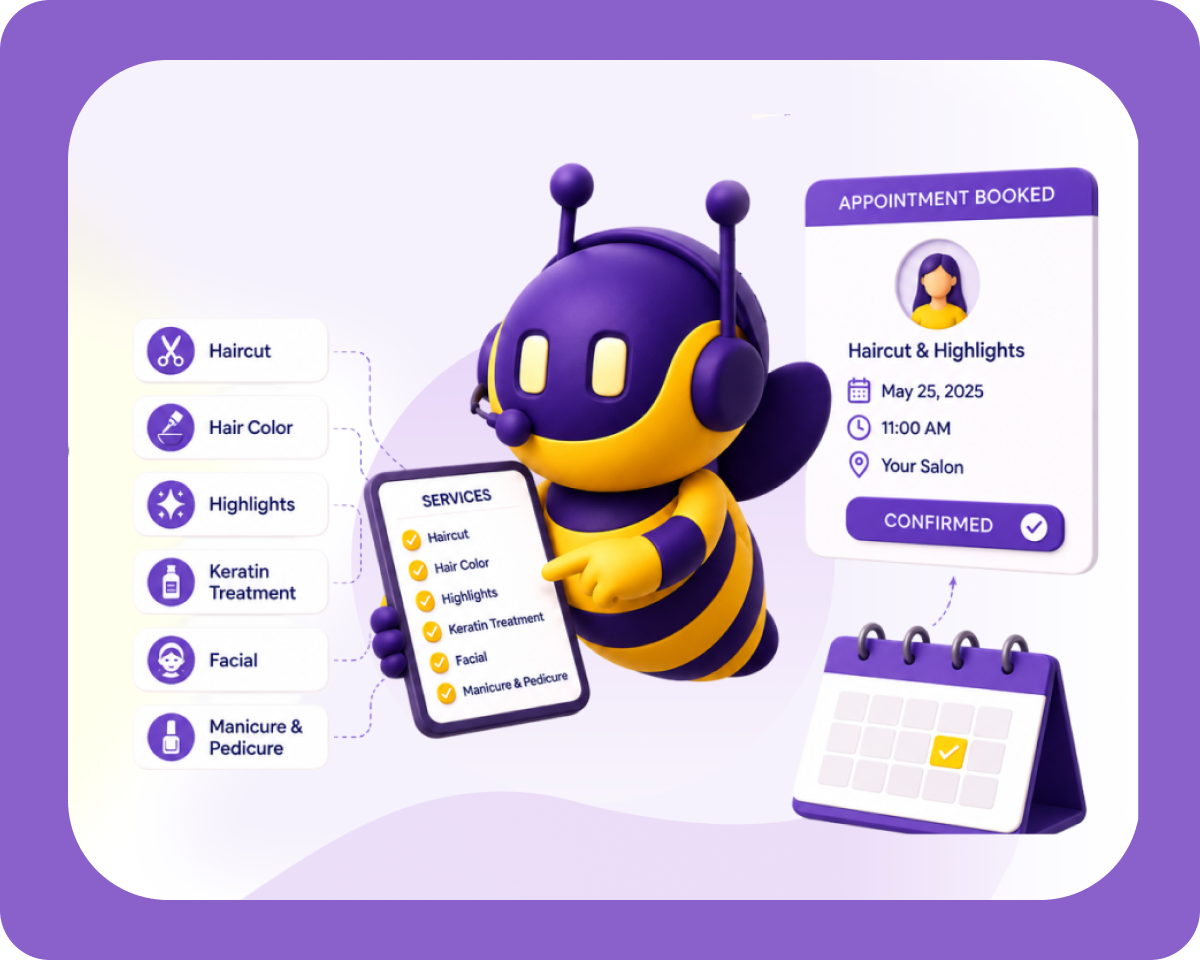
- Incoming calls: AI phone systems can answer calls 24/7, confirm hours, explain services, and route complex queries to staff.
- Appointment booking: Clients can book, reschedule, or cancel through AI without waiting on hold or calling during business hours.
- FAQs: Pricing, parking, what to expect before a color treatment AI handles these consistently and without frustration.
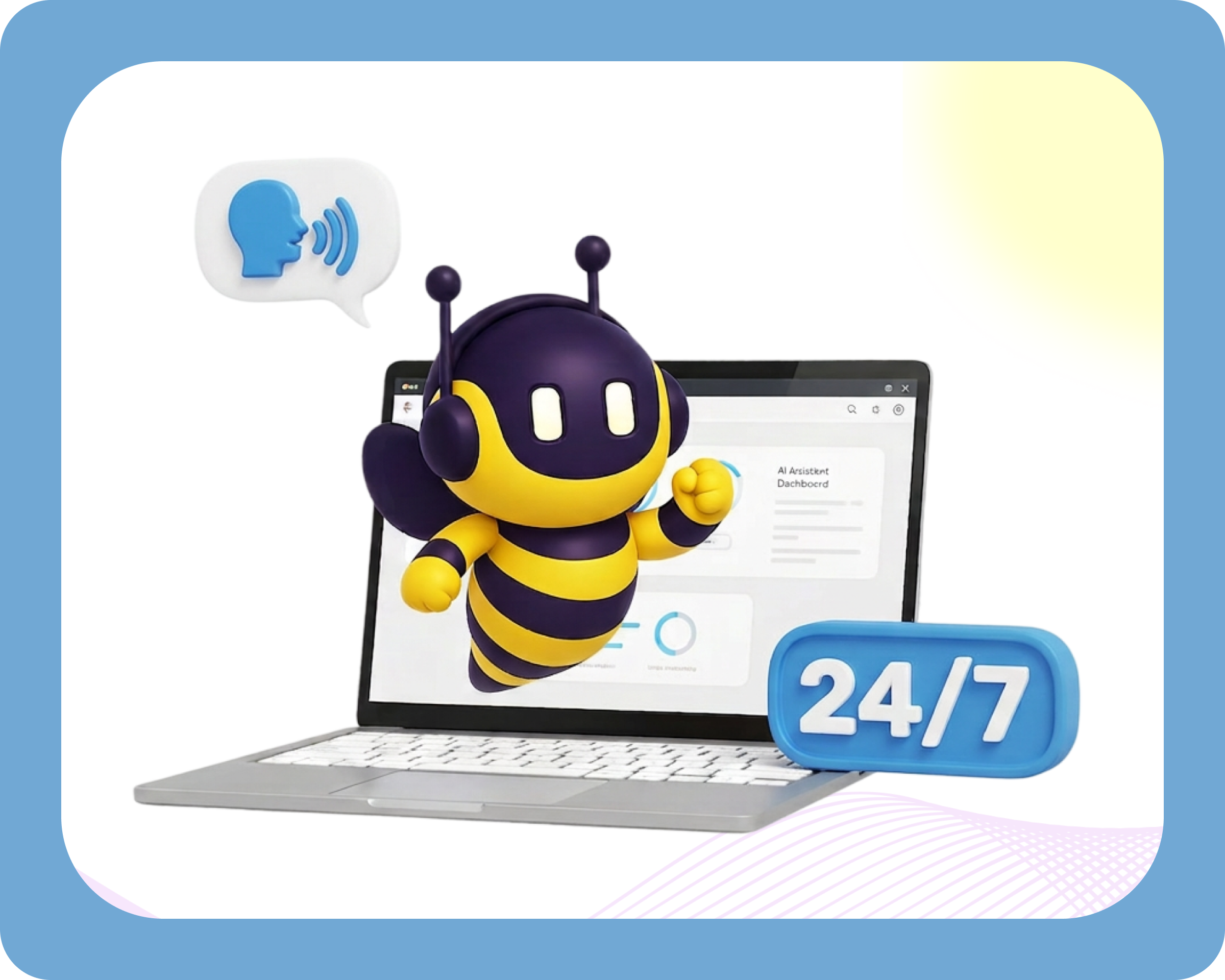
- After-hours requests: Roughly 40% of booking activity happens outside business hours. AI captures those appointments instead of letting them go to a competitor.
- Appointment confirmations and reminders: Automated texts and calls reduce no-shows without your team lifting a finger.
To understand which tasks AI can realistically take over, it’s helpful to learn what an AI receptionist for salons actually does in a typical salon environment.
Practical example solo salon: You’re mid-color with a client and your phone rings three times in a row. With an AI receptionist, all three callers get immediate answers and two of them book appointments on the spot. You don’t miss a beat.
What Tasks Still Need a Human Receptionist?
A lot of what makes your salon special requires a real person. AI can handle volume. Humans handle nuance.
Here’s what your front desk staff does that AI can’t replicate well:
- Walk-in management: Reading the room, juggling wait times, and making someone feel welcome the moment they walk through the door.
- Emotional situations: A client who hates her highlights. Someone going through a tough time who just needs to feel cared for. These moments require empathy.
- Upselling and recommendations: A skilled receptionist notices a client’s roots growing in and suggests adding a gloss treatment. That’s intuition and relationship, not automation.
- VIP client care: High-value clients expect to be known and recognized. AI doesn’t remember that Mrs. Chen always wants Earl Grey, not coffee.
- Conflict resolution: When something goes wrong a double booking, a long wait, a service that didn’t land right humans de-escalate. AI escalates frustration.
Practical example busy Saturday: A bride-to-be arrives flustered because her appointment got mixed up the week before her wedding. Your receptionist handles it with grace, rebooks her, and throws in a complimentary conditioning treatment. That’s the kind of moment that earns a five-star review.
Why Are Salons Adopting AI Instead of Hiring More Staff?
Because hiring is hard, and the math on missed calls is harder. Salon owners aren’t choosing AI over people because it’s trendy they’re doing it because they’re stuck between a labor market that makes hiring unreliable and a business model that can’t afford to lose bookings.
Here’s the reality many salon owners are dealing with:
- Labor shortages: Finding and keeping reliable front desk staff is genuinely difficult. High turnover means constant retraining.
- Cost of staffing: A full-time receptionist costs $35,000–$50,000 per year in salary alone, plus benefits. AI systems run a fraction of that.
- Missed calls equal lost revenue: Studies suggest salons miss 30–40% of incoming calls during peak hours. Each missed call is a potential appointment gone.
- Scalability: If you’re running two or three locations, you can’t duplicate a great receptionist. But you can deploy one AI system across all locations.
AI fills the gaps after hours, during services, on holidays without calling in sick.
Many owners are investing in automation because the real ROI from AI receptionists goes beyond cost savings and includes more captured bookings.
How Are Successful Salons Using AI and Human Staff Together?
The smartest approach in 2026 is the hybrid model AI handles the routine, humans handle the relationship.
Here’s how it plays out in practice:
Your AI receptionist answers every call, books standard appointments, sends reminders, and fields FAQs. When a caller has a complex request a bridal party booking, a color correction consultation, or a complaint it flags the call or transfers it to a live team member.
Your human receptionist arrives to a desk that’s already organized. Appointments are confirmed. Reminders are sent. The inbox isn’t overflowing with “What are your hours?” messages. She can focus on greeting clients, building rapport, managing the flow of the day, and driving retail sales.
Practical example multi-location salon: A group with three locations uses AI to handle all incoming calls and after-hours bookings across every location. Each location still has a front desk person, but they’re freed up to focus on client experience, not call volume. Booking rates across all three locations went up. Staff reported less stress.
Many growing businesses are choosing a hybrid model, and this AI receptionist vs human receptionist for salons comparison explains why.
This AI receptionist success story for growing salons shows how automation can improve efficiency without sacrificing customer service.
What Concerns Do Salon Owners Have About Replacing Receptionists?
These are fair concerns, and they deserve honest answers not sales pitches.
The most common worries salon owners raise:
- “Will clients feel like they’re talking to a machine?” Some will notice. Clients who value the personal touch may prefer a human voice. This is why most salons use AI for calls only when the line is busy or after hours, not as the primary point of contact.
- “What if the AI makes mistakes?” It will, occasionally. Misread requests, wrong time slots, miscommunication on services. Good AI systems flag uncertain situations for human review rather than guessing.
- “My team doesn’t trust new technology.” Staff buy-in matters. If your receptionist thinks AI is there to replace her, she won’t support it. If she sees it as a tool that takes the annoying stuff off her plate, adoption goes much smoother.
- “What if it doesn’t sound like us?” Customization is a real concern. Generic AI responses don’t reflect your salon’s personality. Look for tools that let you configure scripts, tone, and responses to match your brand.
Before making a decision, many owners look at real salon owner experiences with AI receptionists to understand what implementation actually looks like.
How Do Salon Receptionists Benefit from AI?
Counter intuitively, AI often makes the receptionist’s job better not redundant.
Here’s what changes when AI takes on the repetitive work:
- Less time on hold loops and FAQ calls: Your receptionist isn’t spending half her day explaining your cancellation policy for the hundredth time.
- Better client interactions: When she’s not overwhelmed by call volume, she can actually be present with the people standing in front of her.
- Reduced stress: High call volume and constant interruptions are a major source of burnout. Removing that pressure changes the feel of the workday.
- Higher productivity: A receptionist who isn’t buried in routine tasks can focus on upselling, retail, client notes, and experience-building.
Many salon receptionists who initially felt threatened by AI tools report a preference for working alongside them after a few weeks.
Which Types of Salons Benefit Most from AI Receptionists?
Not every salon has the same need but most benefit in some way.
- Solo salons and booth renters: You’re the stylist and the receptionist. AI means you stop losing bookings every time you’re behind the chair.
- High-volume salons: If your phones are ringing off the hook on Friday afternoons, AI absorbs the overflow without dropping calls.
- Multi-location salons: Managing front desk staffing across multiple locations is a real operational challenge. AI scales in ways that people don’t.
Smaller salons with an established, loyal client base who prefer personal calls may see less benefit. But even then, after-hours booking alone often pays for the cost of most AI tools.
What Mistakes Should Salons Avoid When Introducing AI?
Implementation matters as much as the tool itself. Here’s where salon owners go wrong:
- Replacing humans too quickly: Going from a full-time receptionist to AI-only overnight is a recipe for client complaints. Transition gradually, starting with after-hours coverage or overflow calls.
- Poor onboarding: Dropping a new AI system into your workflow without training it on your services, pricing, and policies will produce bad answers. Spend time setting it up properly.
- No customization: Out-of-the-box responses often sound robotic and generic. Tailor the tone, script, and service details to sound like your salon.
- Not telling your team: Staff who feel blindsided become resistant. Involve them early and frame it as a tool to help them not replace them.
- Setting it and forgetting it: AI systems need maintenance. Review conversation logs, catch errors, and update service and pricing information regularly.
What Will the Salon Front Desk Look Like in the Future?
Smarter, more personalized, and still very much human-led.
The front desk isn’t disappearing. It’s evolving. The salons that will stand out in the next few years are the ones building thoughtful workflows where AI handles volume and humans handle value.
Expect to see:
- AI systems that learn client preferences over time and flag regulars for personalized outreach
- Integrated scheduling that syncs AI bookings with stylist preferences, commission structures, and service time buffers
- Real-time data on missed calls, booking conversion rates, and peak demand periods giving salon owners information they never had before
- Human receptionists whose role shifts toward client experience, retention, and retail rather than logistics
The future of your front desk isn’t a robot. It’s a smarter operation.
Should Your Salon Invest in AI or Hire More Staff?
The honest answer: it depends on your specific bottleneck.
If your problem is missed calls, after-hours bookings, or no-shows AI addresses all three directly.
If your problem is client experience, walk-in management, or staff culture hire people and invest in training.
Most mid-size salons and above need both. The question isn’t AI or staff. It’s how you configure them together.
Start small. Add AI for after-hours coverage and confirmation texts. See how it affects your booking rate and your team’s workload. Then expand from there.
Tools like BookingBee.ai are built specifically for salons they handle inbound calls, manage bookings, and work alongside your existing staff rather than replacing them. The goal is fewer missed opportunities, not fewer people.
What’s the Honest Answer for Salon Owners in 2026?
AI will not replace your salon receptionist in 2026. It will change what she does, how she spends her time, and what you expect from the front desk role.
The salons getting ahead right now aren’t the ones eliminating their front desk they’re the ones using AI to make their front desk stronger. Less reactive. More focused. Better at the parts that actually build client loyalty.
If you’re running a busy salon with staffing challenges, missed calls, or after-hours blind spots, exploring AI tools is a practical business decision not a bet on hype.
If you’re a solo stylist constantly interrupted by phone calls while your hands are in someone’s hair, AI might be the simplest upgrade you make this year.
What’s the Best Approach for Salon Owners Moving Forward?
The clearest path forward is balance. Invest in AI for the tasks where speed and availability matter most. Invest in people for the moments where warmth and judgment matter most.
Your front desk is part of your brand. Protect what makes it special while removing the friction that holds it back. AI doesn’t replace that experience it protects the time and energy that makes it possible.
Start with a clear picture of where your front desk is losing bookings or creating friction, then decide where AI actually solves those problems. That’s the business decision that pays off.
Frequently Asked Questions
Yes. AI can answer calls, manage bookings, and handle common client questions while staff are away.
Not always. Many clients prioritize quick responses and easy booking over whether they speak to AI or a person.
Yes. Many salons use AI after hours while keeping human receptionists available during the day.
Most AI solutions are flexible, allowing salons to adjust workflows or return to traditional call handling if needed.
Most salon teams become comfortable with AI workflows within a few weeks as repetitive front desk tasks become automated.
 BookingBee is our 24/7 salon concierge, answering calls day and night, booking appointments, handling changes and cancellations, and ensuring we never miss client opportunities. It’s definitely worth giving a try.

Reduce front desk stress with smarter salon AI
See how salons are using AI to reduce missed calls, ease staff workload, and improve customer service without replacing their team.
Book A DemoRelated Posts
How To Train An AI receptionist On Your Salon’s Specific Services

After-Hours Salon Booking: How to Capture Every Late-Night Call
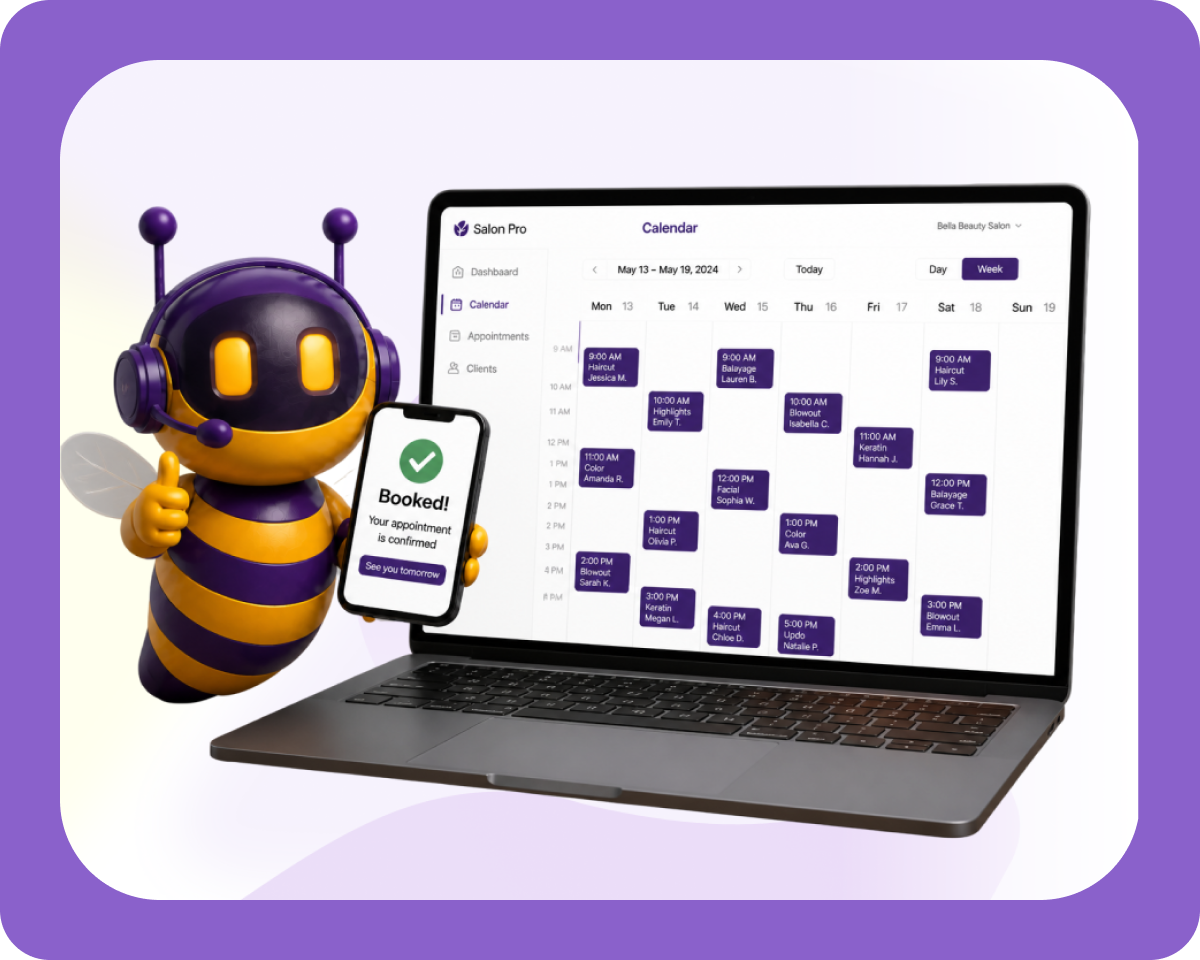
How to Fill Your Salon’s Calendar: Waitlists, Cancellation Recovery
How to Increase Salon Revenue: 10 Strategies That Actually Work in 2026
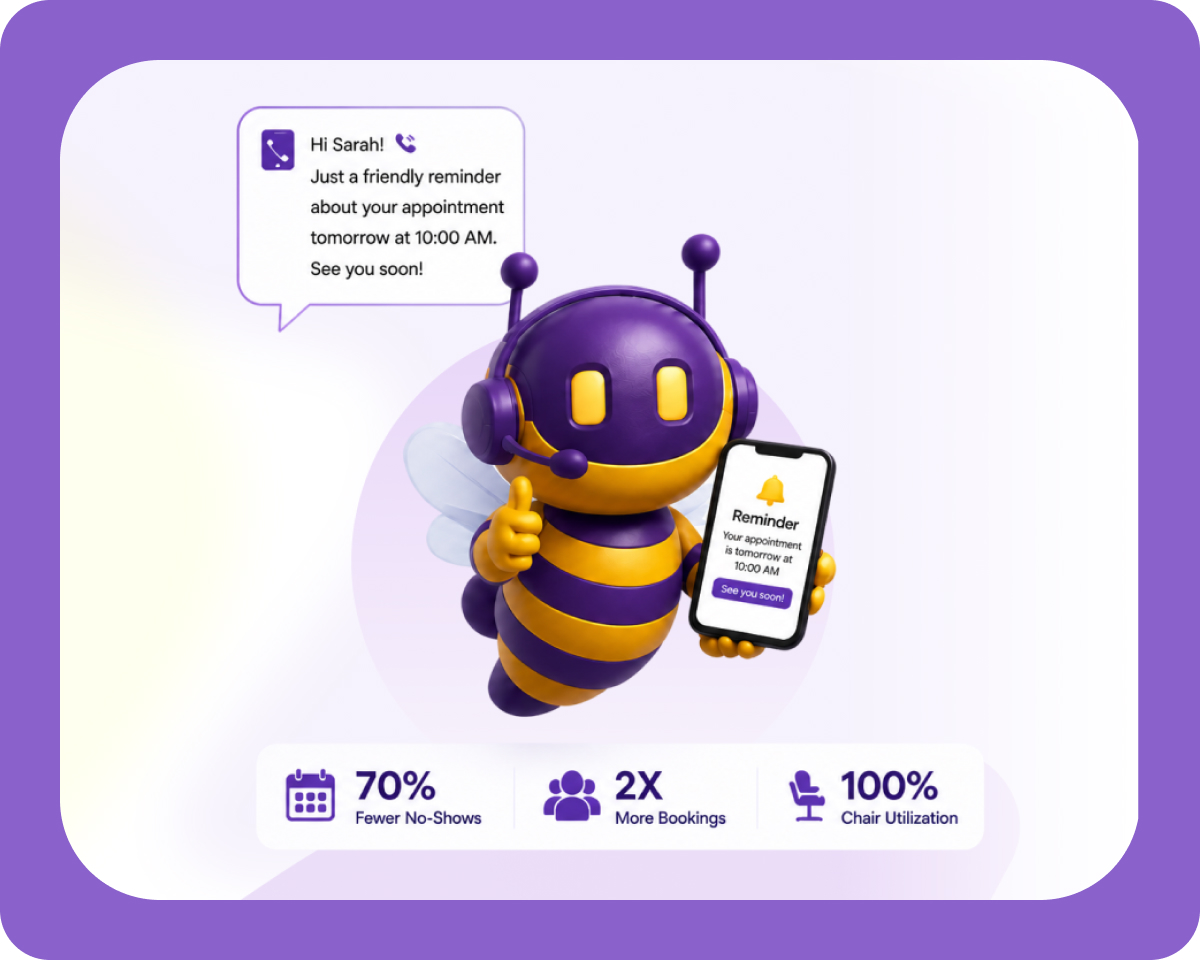
How to Reduce No-Shows at Your Salon: The Complete 2026 Playbook
Latest Blogs
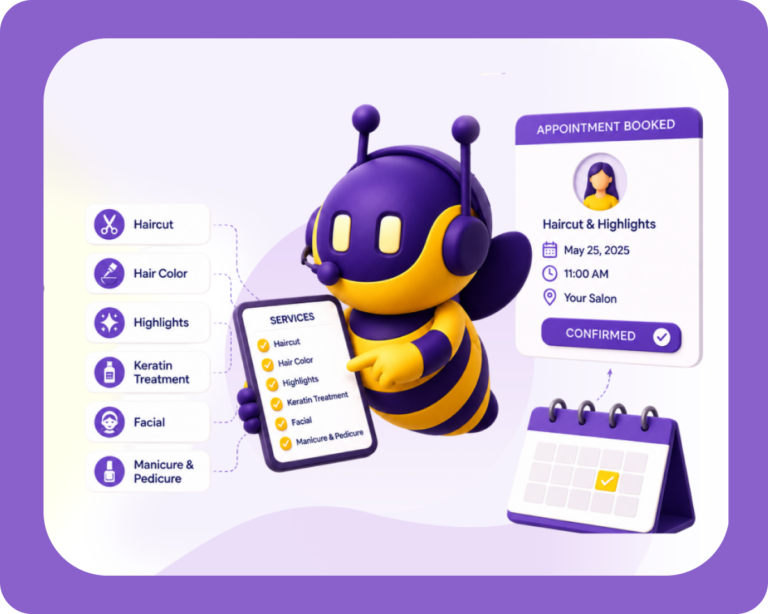
Best practice
July 11, 2026How To Train An AI receptionist On Your Salon’s Specific Services
Every salon runs differently. Your pricing, your stylists’ specialties, your cancellation rules none of that is “one size fits all.” So before you hand off your phone lines to automation,…
Best practice
July 9, 2026After-Hours Salon Booking: How to Capture Every Late-Night Call
Your salon closes at 7 PM, but your clients don’t stop thinking about their next appointment when the lights go off. A working mom remembers she needs a haircut at…
Best practice
July 9, 2026How to Fill Your Salon’s Calendar: Waitlists, Cancellation Recovery
A fully booked calendar and a “pretty good” calendar look almost identical from the outside. The difference shows up at the end of the month in the gaps nobody noticed…