
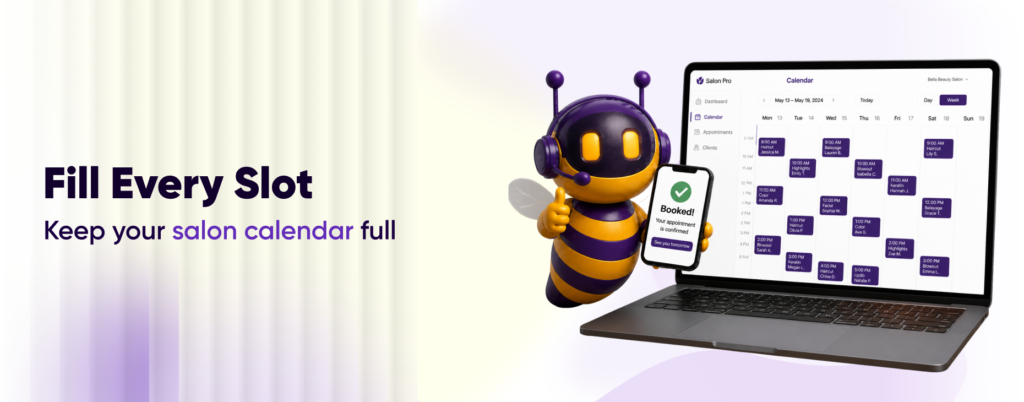
A fully booked calendar and a “pretty good” calendar look almost identical from the outside. The difference shows up at the end of the month in the gaps nobody noticed until the numbers came in short.
Most salons already know they’re losing bookings to missed calls or no-shows. Fewer have a real system for the other leak: slots that open up and just… stay open. A client cancels on Tuesday morning, and that 2pm color appointment sits empty for the rest of the week. Multiply that by every cancellation, every slow Tuesday afternoon, every stylist who has 45 minutes between appointments that never gets filled and it adds up to real, recoverable revenue.
This isn’t about getting more clients in the door. That’s a separate project, and if you want the full picture on that, we’ve covered broader strategies to grow your salon elsewhere. This post is narrower and more tactical: it’s about making sure the clients you already have and the ones asking to get in actually land in the open spots you have right now. Here’s how to build that system.

Why “Fully Booked” Sometimes Isn’t as Full as It Looks
Ask most salon owners how business is going and you’ll hear “we’re slammed” or “we’re slow.” Rarely do you hear the more accurate answer: “we’re slammed on three days and bleeding slots on the other four.” Average booking counts hide this. A salon running at 95% capacity on Friday and Saturday and 55% capacity Monday through Wednesday can still report a healthy weekly average while quietly leaving two full days of potential revenue on the table.
The fix isn’t more marketing. It’s a system that treats every open slot whatever the reason it opened as something worth actively filling, not passively waiting to fill itself.
That system has three moving parts: a waitlist that actually gets used, a cancellation-recovery process fast enough to matter, and off-peak pricing that makes slow periods worth booking. Let’s go through each.
1. Build a Waitlist That Actually Gets Used
Most salons have an informal waitlist: a sticky note, a mental list, a “call you if something opens up.” The problem isn’t that waitlists don’t work it’s that manual ones are too slow to matter. By the time someone remembers to check the list and make a call, the client who wanted that slot has already booked somewhere else.
What makes a waitlist actually convert:
- Match by service and stylist, not just “anyone available.” A client waiting for a color appointment with Sarah doesn’t want a haircut slot with someone else. Segment your waitlist so you’re not wasting outreach on mismatched offers.
- Notify within minutes, not hours. The moment a slot opens, the first person on the list who matches should hear about it immediately ideally by text, since it gets read faster than email or a voicemail.
- Set a response window. Give the client 15–30 minutes to confirm before moving to the next person. Otherwise a slot can sit “pending” for a day while nobody actually claims it.
- Let clients join proactively. Add a simple “notify me if this opens up” option when someone calls or messages about a fully booked time. You’re capturing intent you’d otherwise lose entirely.
- Prioritize by value where it makes sense. A waitlist doesn’t have to be strictly first-come-first-served. Some salons give first refusal on premium slots to clients with high lifetime value or long tenure worth considering if you’re choosing between two equally interested clients.
A well-run waitlist doesn’t just fill your calendar it turns “we’re fully booked” from a dead end into a delayed yes.
2. Recover Cancellations Before They Become Empty Slots
Every cancellation is really two separate problems: the lost appointment, and the clock now running on how long that slot stays empty. Most salons handle the first problem (rebooking that client eventually) and completely miss the second (filling the specific slot that just opened).
A cancellation-recovery workflow that works:
- Trigger outreach the moment a cancellation happens not at end of day, not the next morning. The faster you reach out, the better your odds someone can take that exact slot.
- Text before you call. Clients are far more likely to see and respond to “A 3pm slot just opened with Marcus today want it?” than a missed call with a voicemail.
- Offer the slot to more than one person if it’s short notice. For same-day openings, a “first to respond gets it” message to 3–4 likely candidates fills the gap faster than working down a list one at a time.
- Track your cancellation-to-rebook time. If it’s taking you hours to notice and react to a cancellation, that’s the actual bottleneck not a lack of demand.
- Don’t ignore the pattern behind the cancellation. If the same time slot or the same client cancels repeatedly, that’s useful data it might point to a scheduling habit worth adjusting, separate from reducing no-shows before they happen, which is its own related problem worth solving in parallel.
The goal isn’t eliminating cancellations. Clients will always need to reschedule sometimes. The goal is making sure a cancellation costs you minutes of empty chair time instead of the rest of the day.
3. Use Off-Peak Promotions to Even Out Demand
Every salon has a demand curve: Saturdays packed solid, Tuesday afternoons quiet enough to hear the blow dryers from three chairs over. Instead of treating slow periods as dead time, use them as a lever.
Off-peak tactics that don’t feel like discounting your work:
- Time-based pricing, not blanket discounts. A 10% “weekday morning” rate reads very differently to clients than “everything’s on sale.” It signals availability, not desperation.
- Bundle add-ons instead of cutting your service price. A free deep-conditioning treatment with a Tuesday color appointment protects your price point while still making the slow slot more attractive.
- Target specific client segments for specific gaps. Retirees and remote workers can often book weekday mornings a short “we have Tuesday 10am openings this week” message to clients whose booking history shows flexible schedules performs better than a broad promo blast.
- Make it easy to say yes fast. Off-peak offers work best with a short response window (“today only” or “this week”) open-ended offers get saved and forgotten.
- Rotate the offer, not just the discount. If every off-peak promo is a straight percentage off, clients start waiting for the next sale instead of booking now. Alternate between price incentives, added services, and loyalty-point multipliers to keep the offer feeling fresh.
Done well, off-peak promotions don’t cannibalize your busy-day revenue. They convert dead time into revenue you’d otherwise get zero dollars from.
A Composite Example: What This Looks Like Together
Consider a hypothetical mid-sized salon with six chairs. On a typical Tuesday, two cancellations come in one at 11am, one at 4pm. Without a system, both slots likely sit empty for the day; the front desk is busy with walk-ins and doesn’t have time to work the phones. With a waitlist and cancellation-recovery process in place, the 11am slot gets offered by text to three waitlisted clients within minutes, and the first to respond takes it. The 4pm slot, being harder to fill same-day, gets rolled into that week’s off-peak promotion and offered to clients with flexible schedules at a modest bundled incentive.
Neither fix is complicated on its own. The value comes from having both running automatically, every day, without relying on someone remembering to do it during a busy shift.
4. Put It on Autopilot Where You Can
Waitlist matching, instant cancellation outreach, and time-sensitive off-peak offers all share the same requirement: speed. A manual system that takes hours to react will always lose bookings that an automated one would have caught in minutes.
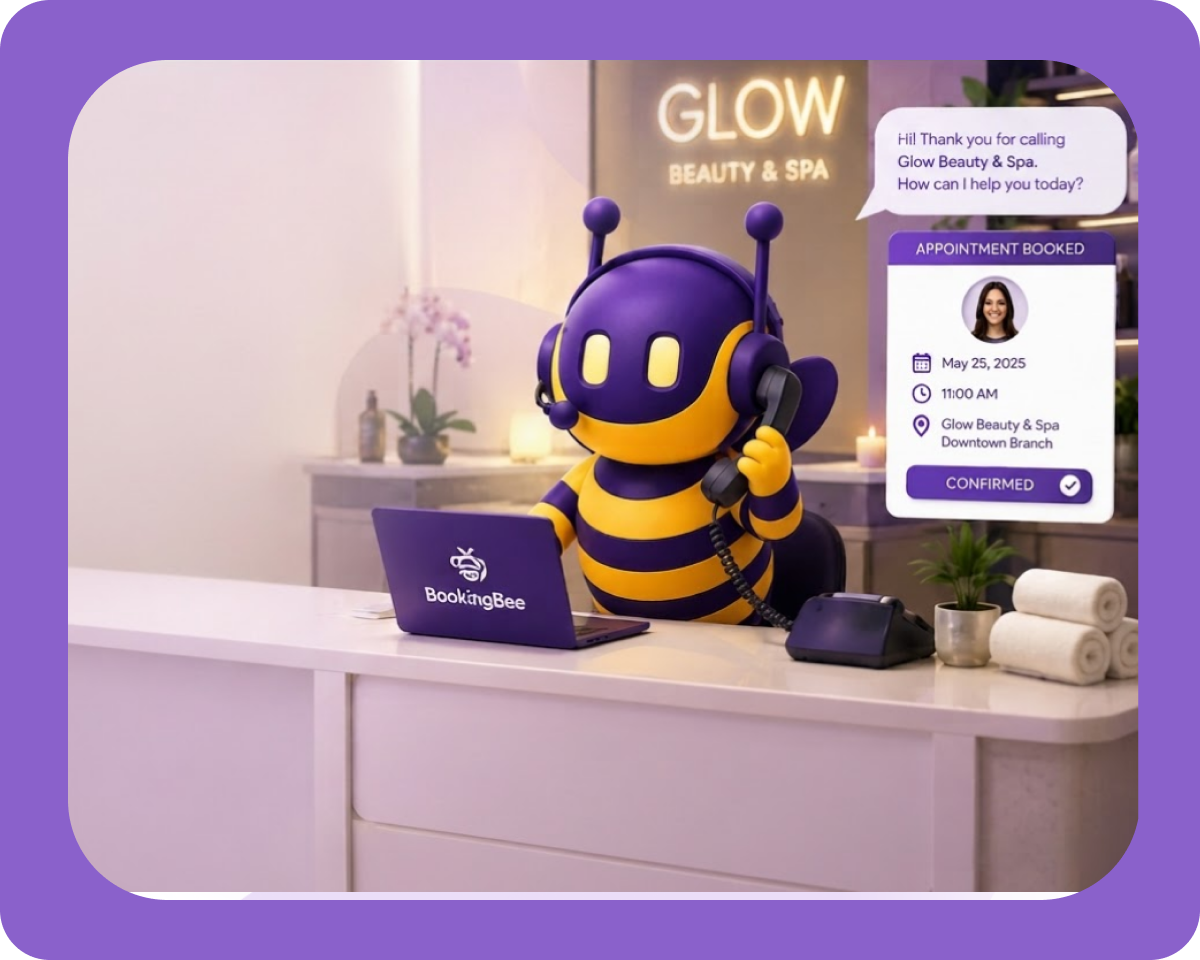
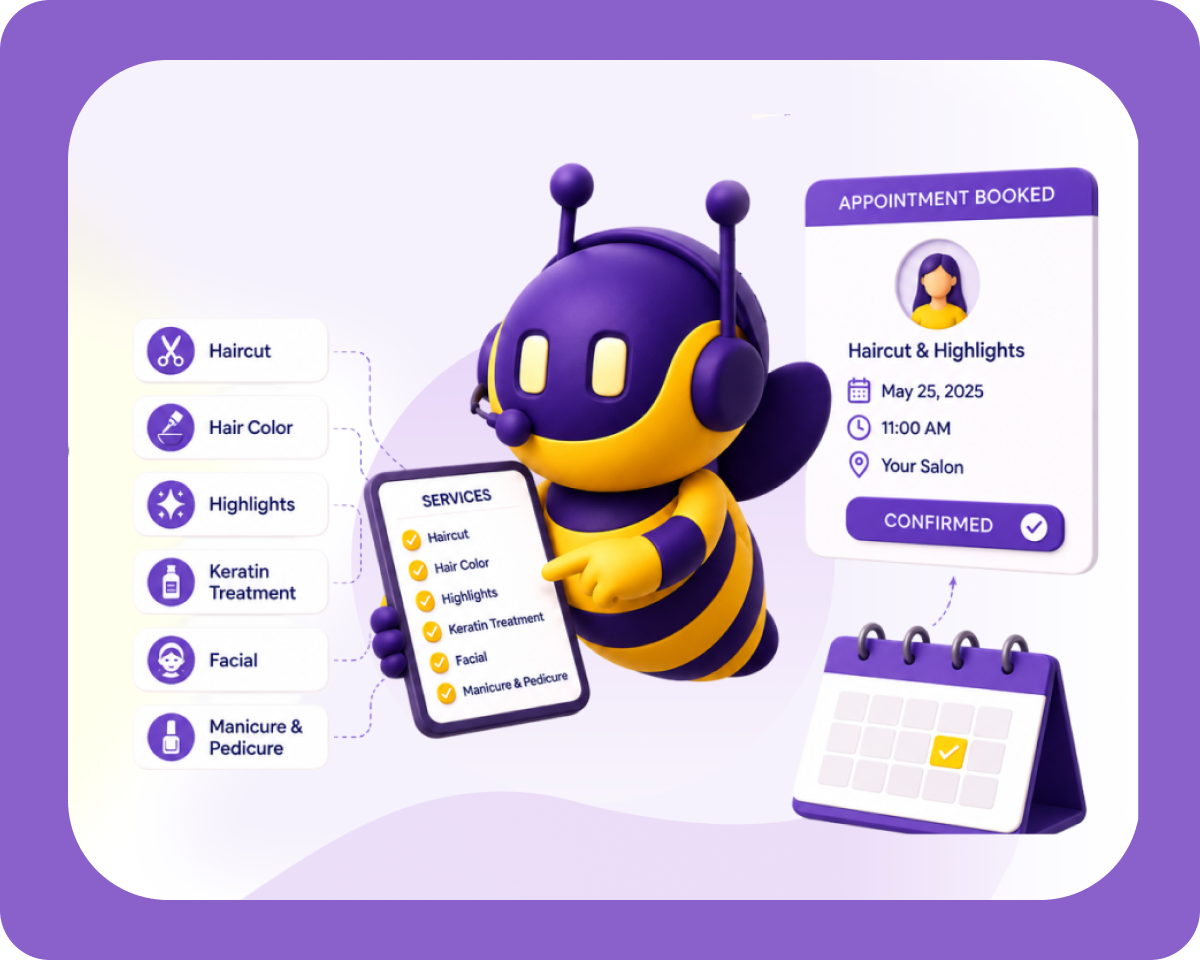
This is where a lot of salons layer in automation not to replace the relationship with clients, but to make sure no opening goes unnoticed while your front desk is busy with the client actually in the chair. This is closely related to what an AI receptionist for salons actually does: an AI receptionist like BookingBee can book your waitlist the moment a slot opens, reach out automatically after a cancellation, and send time-boxed off-peak offers to the right client segments all without anyone needing to remember to do it. It’s part of a wider shift toward automating the busywork behind the scenes so your team can stay focused on the client actually in front of them.
5. Track Your Fill Rate, Not Just Your Booking Count
Total bookings can look healthy while your calendar is still leaking revenue. A better number to watch: fill rate the percentage of your available appointment slots that actually get booked, especially in the 48 hours before they’d otherwise go empty.
If you don’t currently track this, start simple: once a week, count how many slots opened up from cancellations or no-shows, and how many of those got rebooked within 24 hours. That single number will tell you more about your calendar’s real health than your total appointment count ever will.
Common Mistakes That Sabotage Calendar-Filling Efforts
Even salons that try to run a system like this can undercut their own results with a few avoidable habits:
- Treating the waitlist as a one-time list instead of a living one. Clients’ availability changes. A waitlist that isn’t refreshed regularly fills up with people who are no longer actually free.
- Waiting too long to offer a slot broadly. If your top waitlist candidate doesn’t respond within the window, move on immediately don’t let a single unanswered text stall the whole process.
- Making off-peak offers too vague. “We have some openings this week” doesn’t convert nearly as well as a specific day, time, and incentive.
- Not closing the loop with staff. If a stylist doesn’t know a gap was filled, you risk double-booking or confusion at the front desk. Whatever system you use, make sure it updates everyone’s calendar in real time.
Putting It All Together
None of these three tactics waitlists, cancellation recovery, off-peak promotions is revolutionary on its own. What actually moves the needle is running all three consistently, without depending on a busy front desk to remember to do it in the moment. Start with whichever gap costs you the most right now: if cancellations are frequent, build the recovery workflow first; if certain days are chronically slow, start with off-peak pricing. Either way, the fastest path to a genuinely full calendar isn’t more marketing spend it’s making sure the openings you already have don’t go to waste.
Frequently Asked Questions
A waitlist proactively fills open appointments with interested clients. Rebooking cancellations happens only after a slot becomes available.
Yes. They fill slower time slots with flexible existing clients while attracting new customers looking for great value.
Within an hour is best. Quick outreach greatly increases the chances of filling last-minute cancellations.
No. Personalized messages feel timely and helpful, making clients more likely to book newly available slots.
Monitor how many cancelled appointments remain unfilled after 24 hours. Frequent empty slots indicate lost revenue from scheduling gaps.
 BookingBee is our 24/7 salon concierge, answering calls day and night, booking appointments, handling changes and cancellations, and ensuring we never miss client opportunities. It’s definitely worth giving a try.

See How BookingBee Fills Your Salon Calendar
See how BookingBee automatically fills open slots before they cost you a client.
Book A DemoRelated Posts



Latest Blogs
Best practice
September 2, 2026How Salons Generated $1M+ With One Move
Every salon owner is chasing growth. New ads. New offers. New retail shelf. New social posts at midnight. But the salons crossing seven figures didn’t do more. They fixed one…
Best practice
August 19, 2026AI Receptionist for Medical and Wellness: Complete Guide
An AI receptionist for medical and wellness practices is a 24/7 conversational voice and messaging tool that automates routine front-desk tasks like booking appointments, answering FAQs, and routing urgent calls.…
Best practice
July 11, 2026How To Train An AI receptionist On Your Salon’s Specific Services
Every salon runs differently. Your pricing, your stylists’ specialties, your cancellation rules none of that is “one size fits all.” So before you hand off your phone lines to automation,…