
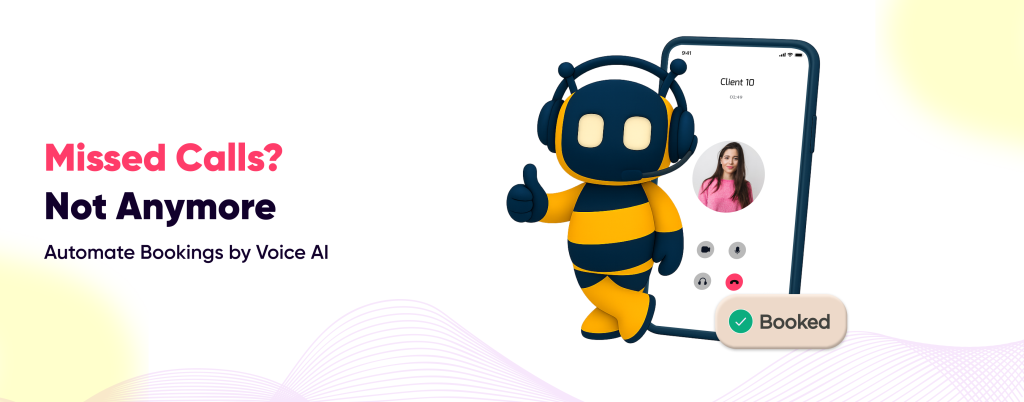
An AI voice agent for salons answers your phone around the clock, books the appointment, and updates your calendar, without waking anyone on your team. That matters most between 6 PM and 9 AM, when your salon’s phone rings the hardest and nobody is at the front desk to answer it. This guide covers what the technology does and how it fits your existing salon software. It also covers what it costs and how to roll it out smoothly, so you can decide if it’s right for your business.

What Is an AI Voice Agent for Salons?
An AI voice agent is software that answers your salon’s phone line. It talks to callers the way a trained receptionist would. It checks real appointment slots, books, reschedules, or cancels visits, and answers common questions about services and pricing.
Unlike a basic phone tree, it holds a real conversation. Callers speak normally, and the AI receptionist for salons understands accents, pauses, and follow-up questions. It connects directly to your booking software. That means it never quotes a slot that isn’t actually open, and every booking lands straight on your calendar.
Why Salons Need an AI Voice Agent
Salons lose bookings every time a call goes unanswered. Most callers who reach voicemail do not call back. They simply call the next salon on their list.
A stylist mid-service cannot also run the front desk. Front desk staff take breaks, go home at closing, and get swamped during rush hours. Every unanswered ring during those windows is a booking handed straight to a competitor.
This is exactly why salons can’t ignore AI voice technology anymore. It closes the gap between when clients want to book and when staff are actually free to answer.
Salons that add one typically capture bookings around the clock, not just during business hours. That protects revenue that used to quietly disappear after closing time. It also helps on weekends and holidays, when call volume often spikes. Clients calling during those peak windows get an answer instead of a busy tone. The salon keeps the booking instead of losing it to a competitor down the street.
What Can an AI Voice Agent Do for a Salon?
An AI voice agent handles most front-desk phone tasks without a human on the line. It books new appointments, reschedules or cancels existing ones, and answers questions about services, pricing, and stylist availability.
Beyond basic booking, a strong AI voice agent also:
- Sends automated SMS and email confirmations to reduce no-shows
- Manages waitlists and fills last-minute cancellations automatically
- Suggests add-on services during the call to increase revenue per visit
- Routes urgent or complex calls to a staff member
- Speaks multiple languages to serve diverse clientele
- Logs every call so owners can review missed opportunities later
These features work together, not in isolation. A confirmation text lowers the chance of an empty chair, and a filled waitlist spot replaces that lost revenue automatically. Together they turn the phone line into a steady booking channel instead of a source of daily friction.
One real example makes the impact clear. AISHA Salon used an AI voice agent and doubled its bookings within 30 days. It also captured 30% more after-hours appointments that would otherwise have gone unanswered. That kind of result is common once every incoming call gets a real answer instead of a ring that trails off into voicemail.
How an AI Voice Agent Works for a Salon
The agent connects to your phone line and your booking software at the same time. When a call comes in, it answers within a second or two. It greets the caller by your salon’s name, just like a receptionist would.
Here is the typical call flow:
- The caller states what they need, such as a haircut or color appointment.
- The AI checks live availability inside your salon software.
- It offers open times and confirms the booking out loud.
- The system updates your calendar instantly and texts a confirmation.
- If the request is unusual, the AI transfers the call to staff.
This is how voice AI transforms a salon’s daily workflow. Front desk staff stop chasing missed calls. Instead, they spend that time on clients who are already in the chair. Owners also gain a clear record of every call, which makes it easier to spot busy hours and plan staffing around them.
AI Voice Agent vs Traditional Salon Receptionist
A human receptionist works set hours and needs breaks. They also cost a monthly salary plus benefits. An AI voice agent works 24/7 and never takes a sick day. It typically costs a fraction of a full-time wage.
A receptionist still adds value for in-person greetings and judgment calls that need a human touch. Most salons that compare hiring a receptionist versus an AI voice agent land on the same answer. The strongest setup pairs both.
AI handles overflow, after-hours calls, and repetitive questions. Staff focus on walk-ins and complex client needs instead. This split also reduces burnout at the front desk, since staff are no longer answering the same booking questions dozens of times a day between other tasks.
AI Voice Agent vs Salon Answering Service
A traditional answering service uses human operators who take messages. They usually cannot book directly into your salon software. Callers often wait for a callback, and that delay risks losing the client to another salon entirely.
An AI voice agent books the appointment during the call itself, in real time. Nobody has to wait for a callback, and no message sits in a queue overnight. When you compare AI receptionist options against answering services, the biggest difference is speed. One confirms a slot in seconds. The other passes along a message and hopes the client waits around. That gap matters most for last-minute callers, who tend to book with whichever salon answers first.
Salon Software & Calendar Integrations
An AI voice agent is only useful if it connects to the salon software you already run. Look for one that syncs directly with your booking calendar. Avoid tools that require manual double-entry between systems.
BookingBee’s AI voice agent integrates with the platforms most salons already use. That includes Meevo, Booker, Phorest, Mindbody, and Square. It reads live stylist schedules, service menus, and pricing straight from your existing salon software.
Nobody has to enter anything twice. Every booking the AI makes shows up on the same calendar your staff already checks each morning. There is no export, import, or manual sync step in between.
What Happens When the AI Can’t Answer?
The AI hands off gracefully whenever a call falls outside what it can resolve on its own. It recognizes complex questions, upset callers, or requests it isn’t confident handling correctly.
In those cases, it transfers the call to available staff. If no one is free, it takes a detailed message for a callback instead. Every after-hours call that can’t be resolved gets logged with the caller’s name, number, and reason.
Nothing slips through overnight. Staff can follow up first thing the next morning with full context already on file, rather than piecing details together from a vague voicemail.
How Much Does an AI Voice Agent for a Salon Cost?
Most AI voice agents for salons are priced per outlet, on a monthly plan. Plans typically scale with staff size and features rather than raw call volume, which keeps costs predictable.
BookingBee, for example, offers three tiers. Essentials suits smaller teams and covers after-hours calls plus software integration. Premier adds multi-outlet support and custom voice options for growing brands. Elite covers unlimited staff and multilingual support for larger operations.
Billing is based on real conversations the AI actually handles. You are never charged for missed or dropped calls. Most plans include free setup and flexible monthly or yearly billing. There is no long-term contract, so you can cancel anytime if it doesn’t fit your salon.
An AI voice agent protects salon revenue around the clock, so the math tends to favor the salon. Most owners recover the monthly cost within the first few extra bookings the AI captures. Those are often the exact calls that would have gone to voicemail before.
How to Choose the Best AI Voice Agent for Your Salon
Start with integration. Confirm the agent connects natively to your booking software before comparing anything else. That connection is what makes every booking accurate.
Then check these points:
- Does it handle your salon’s specific services and terminology correctly?
- Can it manage multiple locations from one dashboard, if needed?
- Does it support the languages your clients actually speak?
- How fast is setup, and is a free trial or demo offered?
- Does pricing scale fairly as your salon grows over time?
Salons running several locations should also check how the system handles calls across multiple locations. Call volume and staffing needs often differ by site, so the AI should adjust accordingly.
How to Implement an AI Voice Agent in a Salon
Implementation usually takes less than a day for most salons. Start by connecting the AI voice agent to your existing booking software so it can read live availability right away.
Next, train it on your salon’s specific services, pricing, and stylist names. Most providers offer guided steps to train an AI receptionist on your services, so it answers accurately from day one.
Test it with a few sample calls before going live. Then monitor the call logs during the first week to catch anything it should handle differently. Small adjustments early on save confusion later, once real clients start calling in.
Many salons pair the rollout with a broader push to capture more appointments. They also work on filling open slots on the calendar using the same system. Together, this turns phone coverage into a steady source of new revenue instead of a daily staffing headache.An AI voice agent for salons is not a replacement for your team. It is a way to make sure every call gets answered, every open slot gets filled, and every client reaches a real booking instead of a dead end. Salons that make the switch usually notice the difference within the first week, simply because the phone stops being a weak point in an otherwise smooth-running business.
Frequently Asked Questions
Yes. An AI voice agent for salons checks real-time availability directly in your salon software before confirming anything. It books new appointments, reschedules existing ones, and cancels visits during the same call, without staff involvement. Because it reads live stylist schedules, it never offers a time slot that’s already taken, and every booking shows up instantly on your calendar.
Yes. Most modern AI voice agents, including BookingBee, integrate directly with these platforms, so schedules and pricing stay in sync automatically. The AI reads live stylist calendars, service menus, and pricing straight from your existing salon software. That means every appointment booked over the phone appears instantly on the same calendar your front desk staff already use.
Yes. It answers 24/7, including nights, weekends, and holidays, so calls that would normally go to voicemail get booked instead. Salons lose the most bookings during these unattended hours, when clients simply call the next available salon instead of leaving a message. An AI voice agent closes that gap, capturing appointments your front desk would otherwise miss.
Many won’t notice right away, since the voice sounds natural, responds conversationally, and handles follow-up questions smoothly. Salons can introduce it as an AI assistant upfront if they prefer full transparency with callers. Most clients don’t mind once their appointment gets booked instantly. What matters most to callers is getting a fast, accurate answer every time they call.
Yes. Single-location and small salons often see the fastest payoff, since a handful of extra after-hours bookings each week can cover the monthly cost. Smaller teams also benefit from freeing staff from phone duty, letting stylists focus on clients already in the chair. Setup takes less than a day, so a small salon can start capturing missed calls right away.

 BookingBee lets our clients book appointments anytime, even after hours, with every booking going straight into our calendar. Last month alone, 300+ after-hours calls created $6,000 in value. The team is fast, reliable, and highly responsive. BookingBee has been a game-changer for our salon’s operations and customer experience.

Experience the AI Voice Agent Salons Can’t Resist
Curious why salons can’t resist this AI? Watch BookingBee’s AI receptionist in action and see how easily it automates calls and grows your bookings. Get your demo.
BOOK A DEMORelated Posts
How Salons Generated $1M+ With One Move

AI Receptionist for Medical and Wellness: Complete Guide
How To Train An AI receptionist On Your Salon’s Specific Services
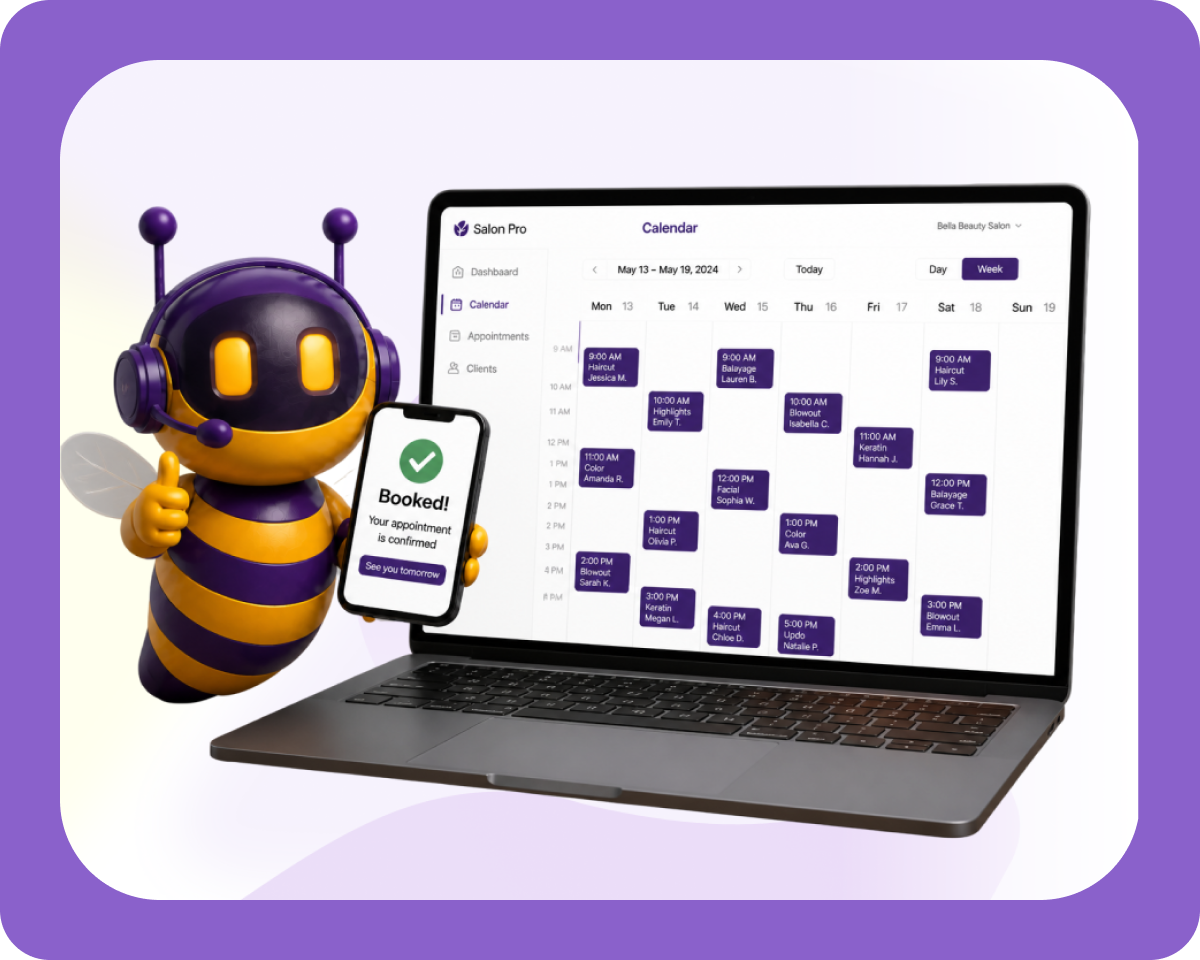
How to Fill Your Salon’s Calendar: Waitlists, Cancellation Recovery
How to Increase Salon Revenue: 10 Strategies That Actually Work in 2026
Latest Blogs
Best practice
September 2, 2026How Salons Generated $1M+ With One Move
Every salon owner is chasing growth. New ads. New offers. New retail shelf. New social posts at midnight. But the salons crossing seven figures didn’t do more. They fixed one…
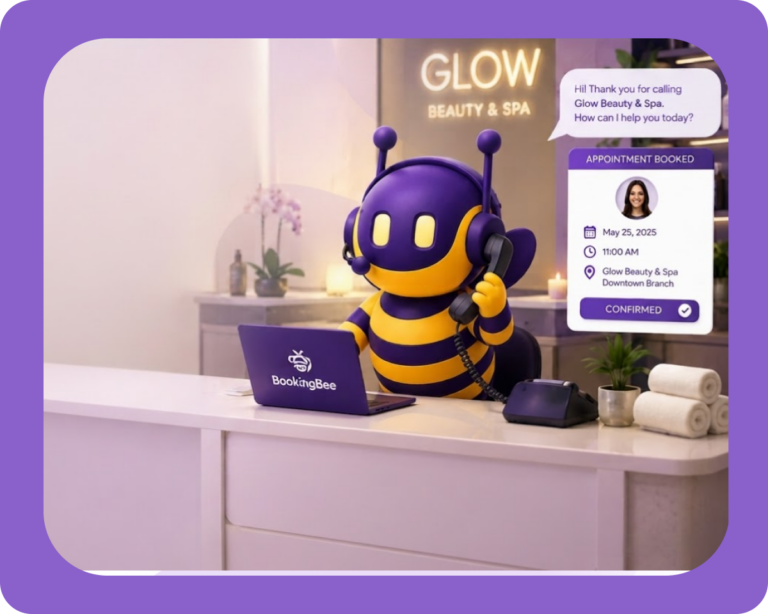
Best practice
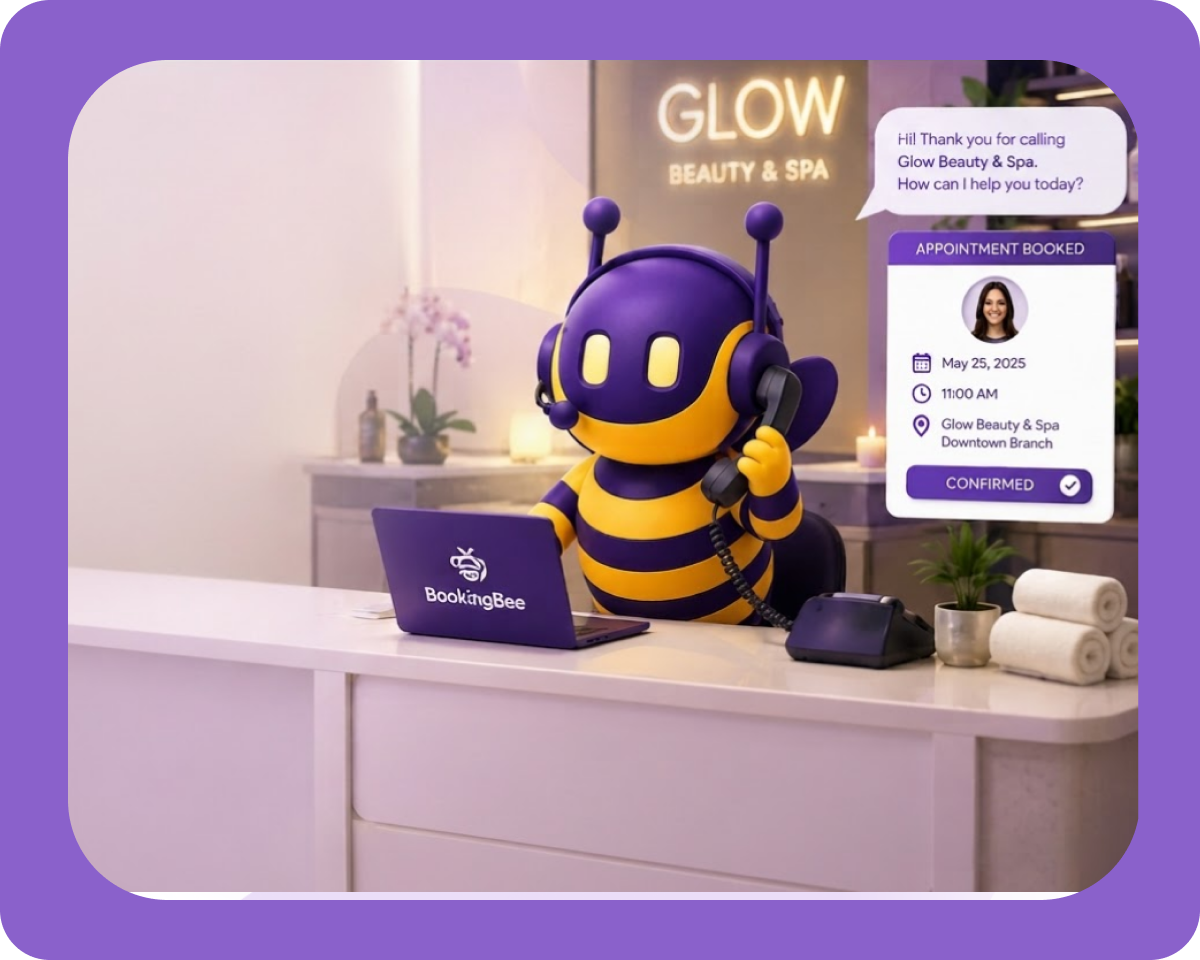
August 19, 2026AI Receptionist for Medical and Wellness: Complete Guide
An AI receptionist for medical and wellness practices is a 24/7 conversational voice and messaging tool that automates routine front-desk tasks like booking appointments, answering FAQs, and routing urgent calls.…
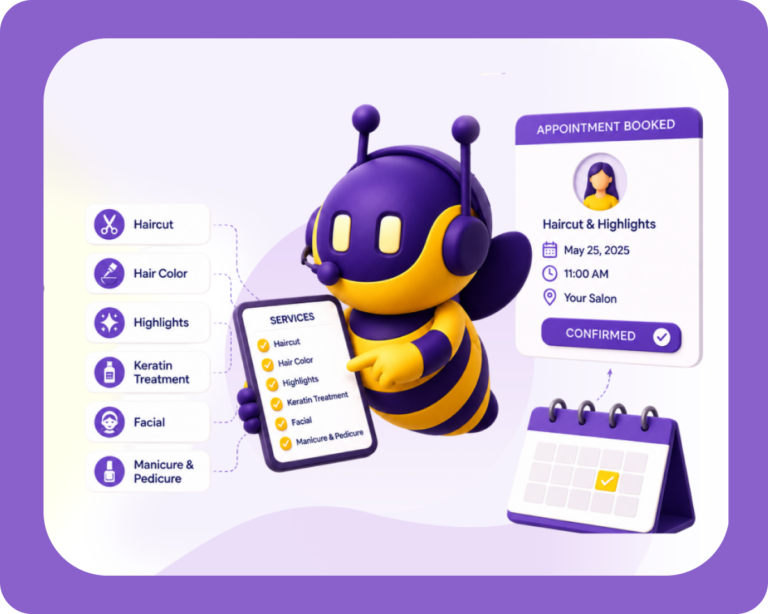
Best practice
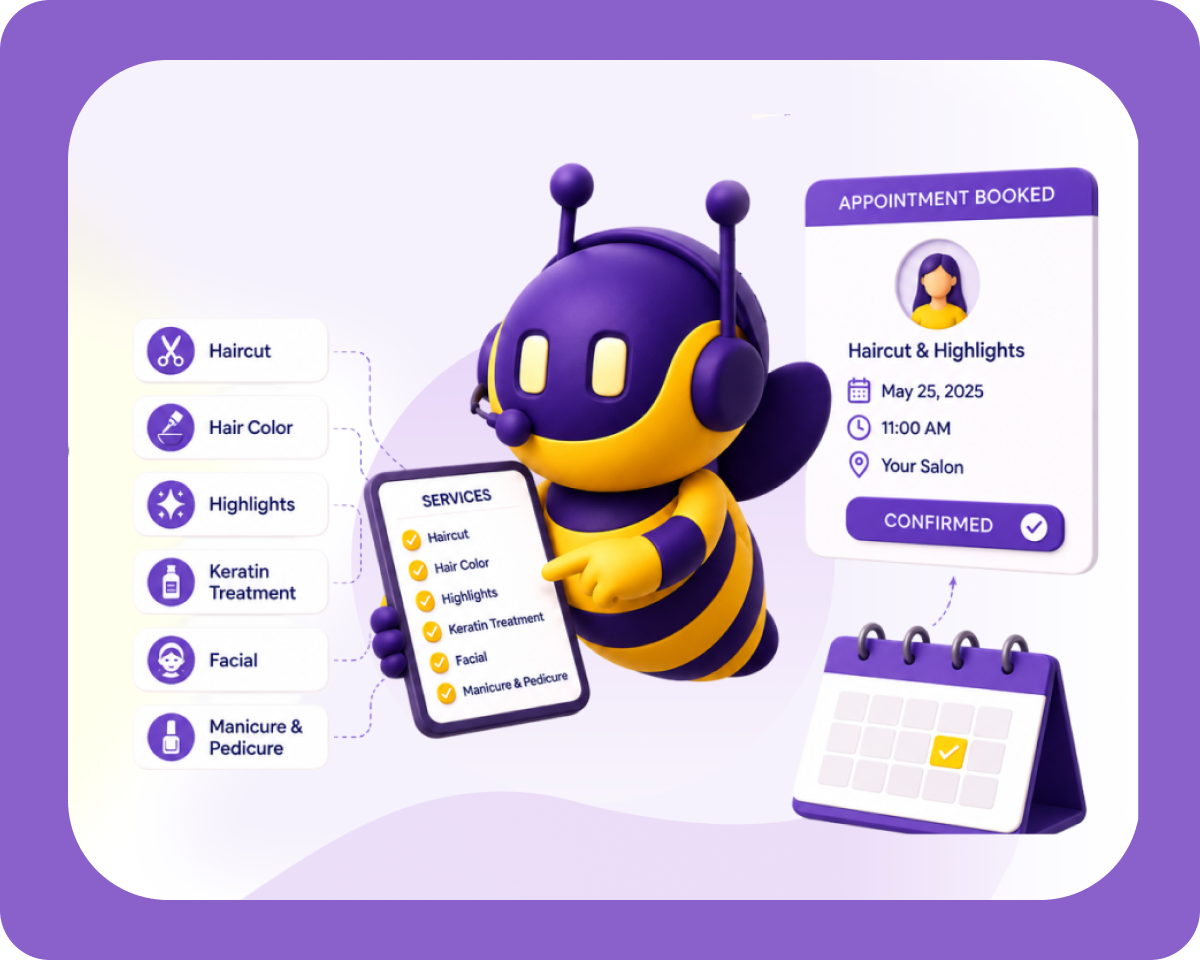
July 11, 2026How To Train An AI receptionist On Your Salon’s Specific Services
Every salon runs differently. Your pricing, your stylists’ specialties, your cancellation rules none of that is “one size fits all.” So before you hand off your phone lines to automation,…