
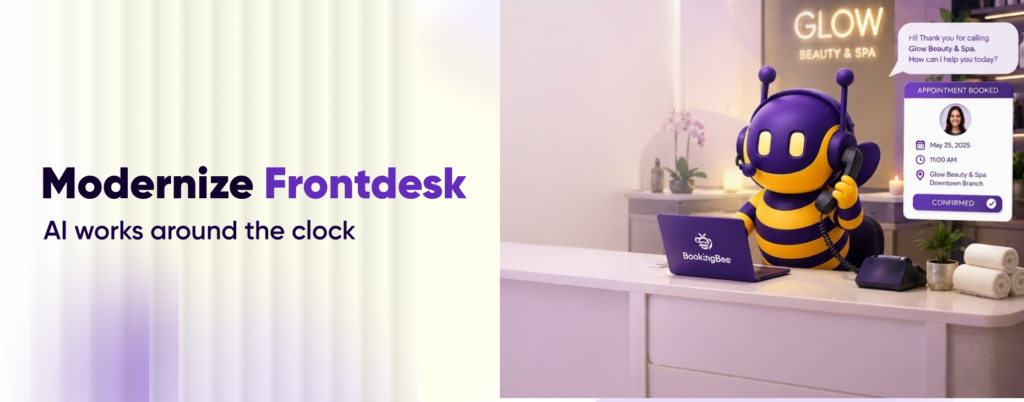
An AI receptionist for medical and wellness practices is a 24/7 conversational voice and messaging tool that automates routine front-desk tasks like booking appointments, answering FAQs, and routing urgent calls.
Patients no longer wait for office hours to book care. They expect a reply the moment they call, text, or go online. When a call is missed, most patients simply call the next clinic on the list.
Front desks at medical and wellness practices are stretched thin. Staff juggle check-ins, insurance questions, and a ringing phone at the same time. Calls get missed, hold times grow, and new patient inquiries slip away.This tool closes exactly that gap. It answers every call, books appointments, and passes along patient details, day or night. Front desk teams stay focused on the patients standing right in front of them, while the AI handles the phone.

What Is an AI Receptionist for Medical and Wellness?
An AI receptionist is a voice-based assistant that answers calls, books visits, and responds to common questions, without a human on the line. It sounds natural, understands context, and works around the clock.
It is different from a basic chatbot or an old-style IVR menu. Chatbots only handle typed text. IVR systems force patients through rigid button menus. An AI medical receptionist actually listens, understands the request, and responds like a trained staff member would.
In healthcare and wellness settings, this tool becomes the first point of contact. It greets callers, answers routine questions, and books the visit, all without hold music or a dropped call.
How Does an AI Receptionist Work?
An AI receptionist works by combining voice recognition, language understanding, and your booking calendar into one system. It listens to the caller, figures out the intent, and takes action in real time.
Natural language processing lets the system understand normal speech instead of forcing patients to say exact keywords. Once it understands the request, appointment scheduling automation checks the calendar and books an open slot instantly.
Along the way, it collects the patient’s name, reason for visit, and contact details, so staff have everything ready before the visit. If a call needs a human touch, such as a clinical question or a complex billing issue, the system hands off to staff smoothly, with the conversation summary attached.
Key Features of an AI Receptionist for Healthcare and Wellness
The strongest AI receptionist for healthcare tools combine scheduling, communication, and reporting in one place. These features matter most for busy practices.
- 24/7 call answering, so no patient call goes to voicemail
- Appointment booking and rescheduling, handled without staff involvement
- Patient FAQs, answered instantly using practice-specific information
- Appointment reminders, sent automatically by call, text, or email
- Lead capture, so new patient inquiries are never lost
- Multilingual support, for practices serving diverse communities
- Call summaries, so staff can review every conversation quickly
- CRM and EHR integration, to keep patient records current
Together, these features turn the phone line into a working member of the front desk team, not just a ringing distraction.
Benefits of AI Receptionists for Medical Practices
An AI receptionist for medical practice teams solve the core problem: too many calls, not enough hands. Medical office AI receptionist picks up every call, books the visit, and routes routine tasks away from staff.
For medical practices, the benefits include:
- Fewer missed patient calls, since every call gets answered on the first ring
- Higher appointment booking rates, since patients can book the moment they think of it
- Lower administrative workload, since staff spend less time on repetitive scheduling calls
- Better staff productivity, since front desk teams focus more time on patients in the office
- Stronger patient communication, since reminders and confirmations go out automatically
For wellness businesses, including med spas, wellness clinics, fitness centers, nutrition practices, and beauty and aesthetic clinics, phone calls are often the first sales conversation a business has. Missing that call means missing revenue. The benefits include:
- Capturing new inquiries around the clock, even after hours or during a packed schedule
- Booking consultations directly onto the calendar, so leads convert into paying clients
- Handling common service questions, like pricing ranges, treatment length, or preparation steps
Strengthening customer engagement with new and returning clients alike. Med spas sit at the intersection of beauty and medical care, which is why a AI receptionist for med spas needs slightly different training than a standard salon setup.
Common Use Cases of AI Receptionists in Medical and Wellness
AI receptionists fit naturally across a wide range of practices, not just one specialty. A few common examples show how broadly the tool applies.
Dental clinics use it to schedule cleanings and follow-up visits without tying up staff on the phone. Dermatology clinics rely on it to handle consultation requests and pre-visit questions. Therapy practices use it to manage appointment calendars while protecting client privacy.
AI Receptionist for Wellness Clinics tools are especially common at med spas, where they answer treatment questions around the clock, and at wellness centers, where they manage bookings across multiple practitioners and service types.
AI Receptionist vs Human Receptionist: A Hybrid Approach
An AI receptionist is not meant to replace the front desk team. It is meant to handle the repetitive, high-volume parts of the job so staff can focus on patients in front of them.
AI handles scheduling, FAQs, reminders, and after-hours calls effectively, since these tasks follow predictable patterns. Human staff are still essential for sensitive conversations, clinical judgment calls, and situations that need empathy or nuance a system cannot fully replicate.The best setups combine both. AI clears the routine call volume, and staff step in exactly when a human touch matters most. This hybrid approach keeps patients cared for without burning out the team.
How AI Receptionists Improve Patient Experience
Patients notice the difference immediately when calls are answered right away instead of going to voicemail. Faster responses build trust before the patient even walks through the door.
Waiting times shrink since patients no longer sit on hold or wait for a callback. Availability around the clock means a patient can book a visit at 9 p.m. just as easily as at 9 a.m.
Conversations also feel personal, since the AI can reference prior visits or preferences stored in the system. Managing an appointment, whether booking, rescheduling, or canceling, becomes a quick, low-effort task instead of a phone-tag hassle.
How AI Receptionists Help Reduce No-Shows and Improve Revenue
Missed appointments cost practices real revenue every week. Automated reminders sent by call, text, or email cut no-show rates significantly, simply by keeping the visit top of mind.
When plans change, easy rescheduling means patients move their visit instead of skipping it entirely. Follow-up communication after a missed call or canceled visit helps recover appointments that would otherwise be lost for good.
Many practices see a similar pattern to what salon owners have found with automated reminders. For a closer look at scheduling strategies for reducing no-shows and boosting booked appointments, see our complete guide to reducing no-shows.
AI Receptionist Integration With Healthcare Systems
An AI receptionist only adds value if it connects cleanly with the systems a practice already runs on. Integration capability has become one of the most searched topics when practices compare providers.
Strong systems sync with EHR and EMR platforms, so patient records stay accurate and current. They connect with scheduling software to avoid double-bookings, and with CRM systems to keep lead and patient data centralized in one place.
Some setups also link to payment and intake systems, letting patients complete forms or pay deposits before they ever arrive. This reduces front-desk paperwork and speeds up the check-in process substantially.
Challenges and Limitations of AI Receptionists for Medical and Wellness
No system is perfect out of the box, and AI receptionists are no exception. Setup requires some upfront work, since the assistant needs practice-specific information to sound accurate and helpful.
Training the AI on your specific services, policies, and terminology takes time initially, similar to onboarding a new staff member. Complex conversations, such as unusual clinical questions or emotional situations, may still need a human to step in.
Ongoing human oversight is recommended, so a staff member can review call summaries and correct course when needed. Practices that treat the AI as a trained assistant, not a fully unsupervised system, get the best results. Our guide on training an AI receptionist on your services walks through this setup process in detail.
How to Choose the Right AI Receptionist for Your Practice
The right choice depends on a short checklist of practical factors, not just price. Look for a provider with real healthcare and wellness experience, not a generic call-answering tool.
Compliance support matters for any medical setting, along with strong scheduling capabilities that match how your practice actually books visits. Integration options should cover the software you already use, and voice quality should sound natural, not robotic.
Customization lets the AI reflect your practice’s tone and specific services. Finally, compare pricing models carefully, since some providers charge per call while others offer flat monthly plans.
Future of AI Receptionists in Healthcare and Wellness
AI-powered patient engagement is moving beyond simple call answering toward ongoing relationship management, including proactive check-ins and personalized follow-up. Voice-first interactions are becoming the default way patients prefer to reach a practice.
Predictive scheduling is emerging too, using past booking patterns to suggest optimal appointment slots and reduce gaps in the calendar. Personalized wellness experiences, tailored to each patient’s history and preferences, are likely to become standard rather than a premium feature.Practices that adopt these tools early are positioning themselves ahead of patient expectations, not just catching up to them.
Frequently Asked Questions
An AI receptionist for medical practices is a voice-based assistant that answers incoming calls, books and reschedules appointments, and responds to routine patient questions automatically. It works around the clock, so patients get a reply outside office hours too. Unlike a basic answering service, it understands natural speech, checks live availability, and collects patient details before handing complex calls to staff.
Yes, AI receptionists connect directly to your scheduling software and book, reschedule, or cancel appointments in real time. When a patient calls, the assistant checks live calendar availability, confirms an open slot, and locks it in immediately. It also sends confirmation messages afterward, so both the patient and front desk staff have a clear, accurate record of the booking.
Reputable AI receptionist providers design their systems with healthcare data security and compliance in mind, including encrypted call handling and controlled data access. However, compliance requirements vary by state, specialty, and how patient data is stored or shared. Always confirm HIPAA compliance details and data handling practices directly with your provider before rolling the system out to patients.
AI receptionists can confidently answer general practice questions, such as office hours, accepted insurance, services offered, and pricing ranges. They are not built to give clinical advice or interpret symptoms. When a caller asks a medical question that requires judgment, the assistant recognizes the limit and routes the call to a trained staff member instead of guessing an answer.
Pricing for an AI receptionist typically depends on call volume, features included, and the number of integrations needed, such as EHR or CRM syncing. Some providers charge per call or per minute, which can add up during busy months. Many practices prefer flat monthly plans instead, since they offer predictable costs and unlimited call answering without surprise charges.
 BookingBee is our 24/7 salon concierge, answering calls day and night, booking appointments, handling changes and cancellations, and ensuring we never miss client opportunities. It’s definitely worth giving a try.

Let AI Answer Every Patient Call Today
Stop losing patients to missed calls and full voicemail boxes. See how an AI receptionist built for medical and wellness practices books appointments, answers questions, and keeps your front desk running smoothly, day and night.
Book A DemoRelated Posts
How Salons Generated $1M+ With One Move

How To Train An AI receptionist On Your Salon’s Specific Services
How to Fill Your Salon’s Calendar: Waitlists, Cancellation Recovery
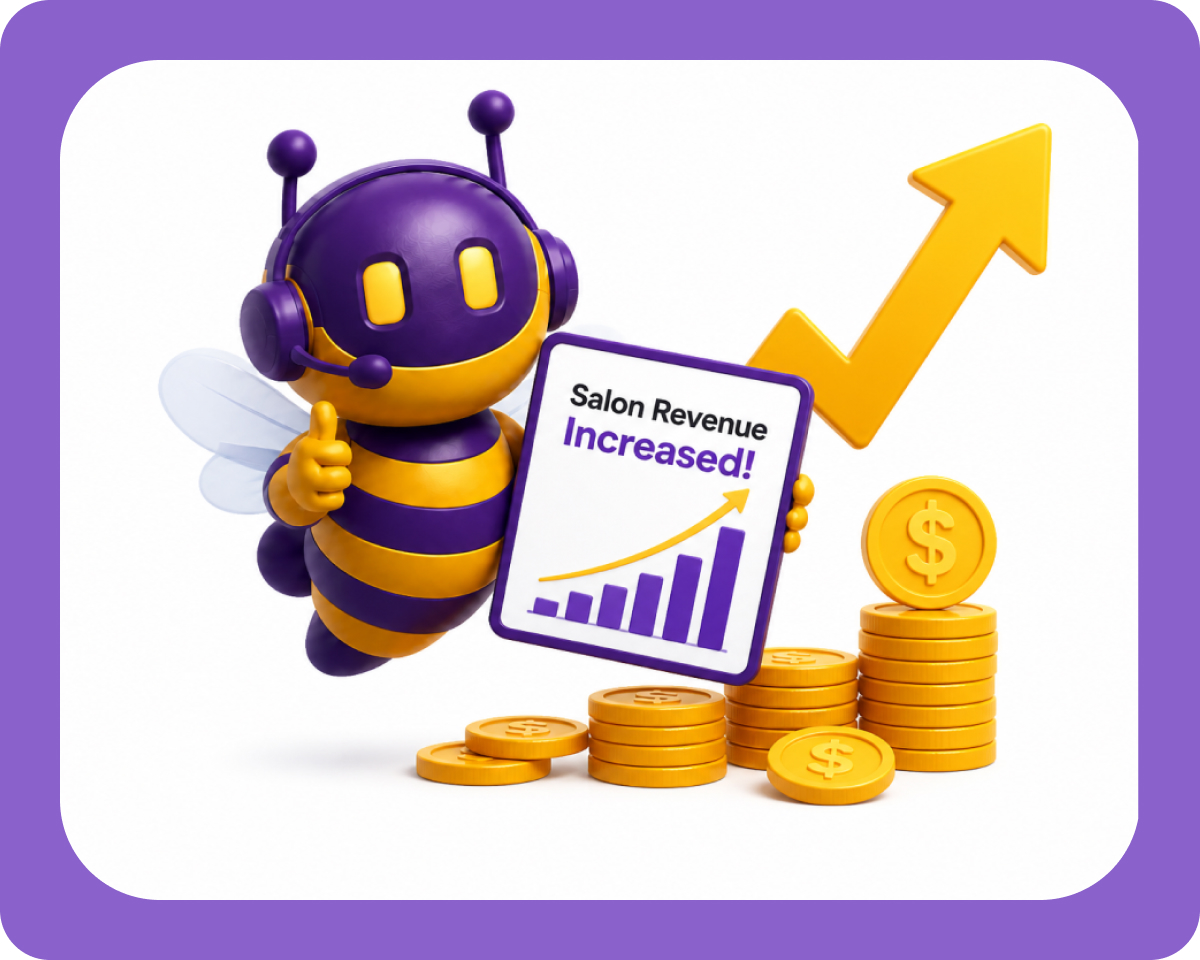
How to Increase Salon Revenue: 10 Strategies That Actually Work in 2026
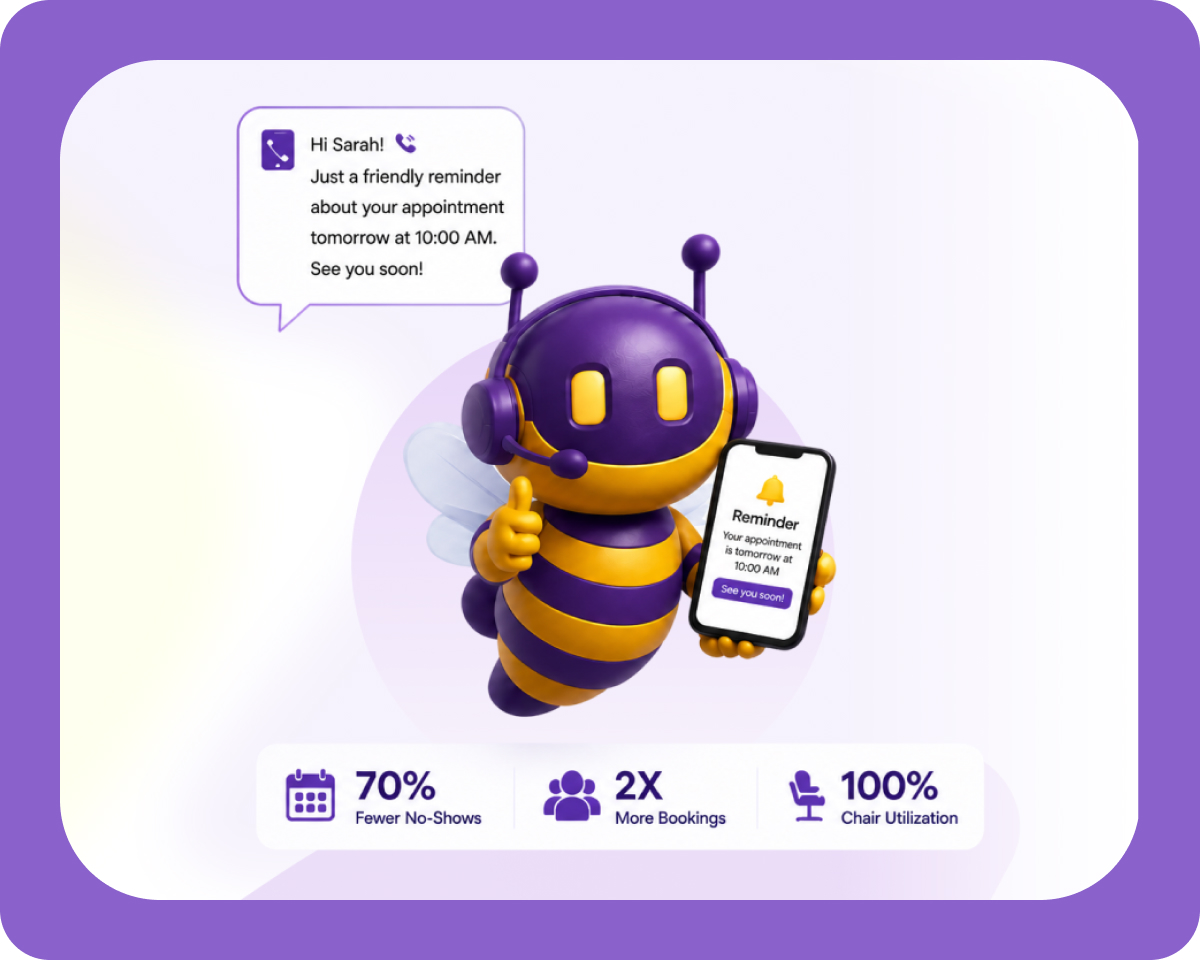
How to Reduce No-Shows at Your Salon: The Complete 2026 Playbook
Latest Blogs
Best practice
September 2, 2026How Salons Generated $1M+ With One Move
Every salon owner is chasing growth. New ads. New offers. New retail shelf. New social posts at midnight. But the salons crossing seven figures didn’t do more. They fixed one…
Best practice
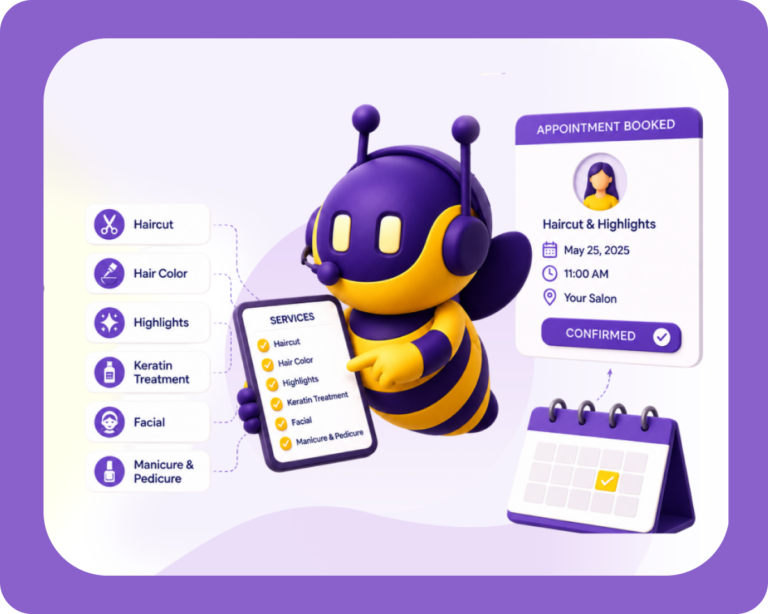
July 11, 2026How To Train An AI receptionist On Your Salon’s Specific Services
Every salon runs differently. Your pricing, your stylists’ specialties, your cancellation rules none of that is “one size fits all.” So before you hand off your phone lines to automation,…
Best practice
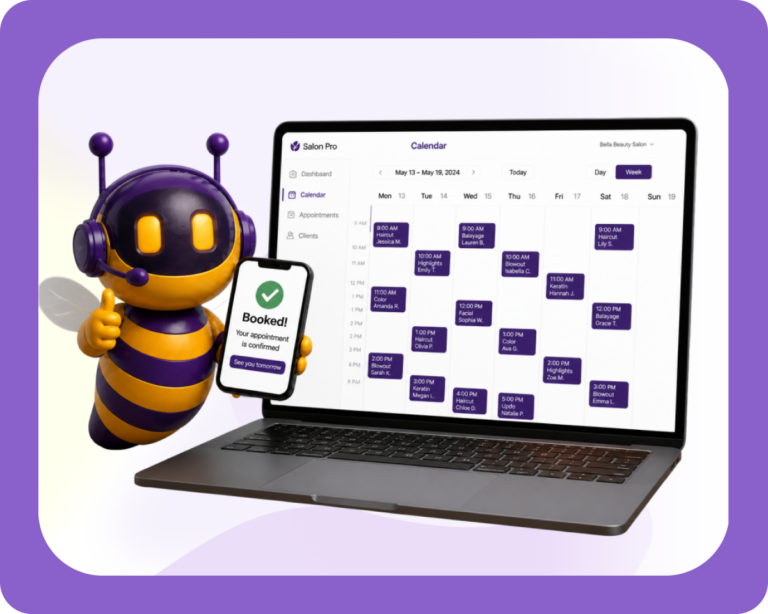
July 9, 2026How to Fill Your Salon’s Calendar: Waitlists, Cancellation Recovery
A fully booked calendar and a “pretty good” calendar look almost identical from the outside. The difference shows up at the end of the month in the gaps nobody noticed…