
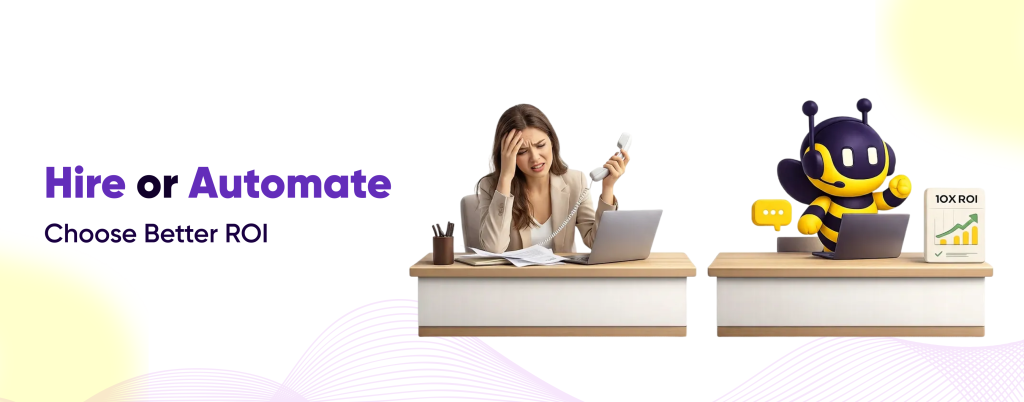
An AI receptionist handles calls, bookings, and client inquiries automatically using software, while a human receptionist does this in person. For salons, the right choice depends on your call volume, budget, and how much personal touch your clients expect.

What Is an AI Receptionist vs a Human Receptionist in a Salon Context?
A human receptionist is a staff member who answers phones, greets walk-ins, schedules appointments, and manages the front desk. An AI receptionist is software that handles the same tasks, calls, texts, and bookings without a person being present.
To better understand what an AI salon receptionist for beauty salon businesses actually is, think of it as a virtual front desk that can answer calls instantly, book appointments, and respond to client queries 24/7 without breaks or delays.
In a salon setting, both serve the same core purpose: making sure clients get booked and their questions are answered. The difference lies in how and when they do it.
A human receptionist brings warmth, judgment, and flexibility. They can read the room, upsell a treatment based on a quick conversation, or comfort an unhappy client. An AI receptionist, on the other hand, works around the clock, never puts a caller on hold, and can handle multiple calls simultaneously without missing a beat.
Neither is universally better. The right fit depends on your salon’s size, budget, and the kind of experience you want to deliver.
How Do AI and Human Receptionists Handle Incoming Calls Differently?
Human receptionists answer calls one at a time. If they’re already with a client or on another call, the next caller waits or gets a voicemail.
AI receptionists handle every incoming call simultaneously. There’s no hold time, no missed call, and no voicemail that goes unchecked until Tuesday morning.
Here’s how a typical call plays out:
- Human receptionist: Greets the caller, chats briefly, checks the booking system manually, confirms the slot, and wraps up. Takes 3–5 minutes on average.
- AI receptionist: Greets the caller by name (if they’re a returning client), pulls up available slots instantly, confirms a booking in under 90 seconds, and sends a confirmation text automatically.
Real scenario Small salon: Maya runs a four-chair salon with one stylist assistant who doubles as a receptionist. On busy Saturday mornings, the assistant is often occupied with clients. Calls during that window frequently go unanswered. Studies suggest salons miss between 30 – 40% of incoming calls during peak hours. For Maya, that’s potential bookings walking out the door.
Which Is Better at Converting Calls Into Bookings?
AI wins on availability; humans win on persuasion.
An AI receptionist converts more calls simply because it answers more calls. A missed call is a lost booking and AI never misses. Salons that implement AI receptionists typically report a 20–35% increase in confirmed bookings within the first few months, largely from calls that would have gone to voicemail before.
Human receptionists, when they do answer, can upsell more naturally. A skilled front desk person might mention that a client’s roots are likely due for a color touch-up or recommend adding a conditioning treatment. That kind of contextual nudge is harder for AI to replicate unless the system is specifically trained for it.
Bottom line: If your biggest problem is missed calls, AI will convert more. If your problem is that you answer every call but clients aren’t adding services, a well-trained human will do better.
How Do They Compare in Handling Missed Calls and After-Hours Inquiries?
AI handles after-hours inquiries completely. A human cannot not without overtime pay or an on-call arrangement.
Most salons receive 15 – 25% of their booking-related calls after business hours. These are clients who browsed your Instagram at 10 PM, decided they want a balayage, and called to check availability. A human receptionist won’t pick up. An AI receptionist will answer, check the schedule, and book the appointment all before you wake up in the morning.
After-hours AI handling typically captures 2 – 5 additional bookings per week for an average-sized salon. Over a year, that’s 100 – 260 appointments that would otherwise have been lost to voicemail or a competitor who picked up.
Can AI Handle Complex Client Requests as Effectively as Humans?
Honestly, not always and it’s important to say that clearly.
AI handles straightforward requests very well: booking, rescheduling, cancellations, pricing questions, hours of operation, and service menus. It handles these faster and more consistently than most humans.
But complex situations are a different story. Consider:
- A client calling to complain about a haircut gone wrong
- A bride trying to coordinate hair and makeup for 8 people across two days
- A client with a medical condition asking whether a chemical treatment is safe for them
These require empathy, judgment, and sometimes professional knowledge. A well-trained human receptionist handles these far better than current AI systems. The best AI tools recognize these situations and either escalate to a human or offer to have someone call back which is acceptable, but not the same as resolving the issue on the spot.
The honest limitation: AI is excellent for transactional communication. It struggles with emotionally sensitive, highly complex, or unpredictable conversations.
How Do AI and Human Receptionists Perform During Peak Hours?
Peak hours are where AI has its clearest advantage.
On a Saturday morning, a human receptionist can handle one call at a time. With a lobby full of clients, a ringing phone, and a stylist needing product from the backroom, something will slip. AI has no such ceiling. It handles 10 simultaneous calls as easily as it handles one.
Real scenario Busy multi-stylist salon: Priya owns a 10-chair salon with three stylists and two assistants. Saturdays bring 40–60 calls. Her one front desk person manages well until about 10 AM, then gets overwhelmed. After switching to an AI receptionist for calls, her front desk person now focuses entirely on in-salon client experience while the AI manages the phone queue without a single missed call.This kind of role separation AI for calls, human for in-person experience is one of the most effective setups for busy salons.
ROI Comparison: Which Delivers Better Business Outcomes for Salons?
ROI depends on what you’re measuring.
AI receptionist ROI:
The math holds just as true for a AI receptionist for barbers – one AI receptionist covers the call volume of a full-time front desk hire.
- Captures after-hours bookings (15–25% more calls answered)
- Reduces no-shows through automated reminders
- Frees existing staff to focus on revenue-generating tasks
- No recruitment cost, no turnover cost
Human receptionist ROI:
- Higher upsell rate per conversation
- Better retention of difficult or unhappy clients
- Stronger brand experience for premium salons
For most salons operating on thin margins, the math favors AI particularly when the primary goal is capturing more bookings without increasing payroll. For luxury salons where client experience is the product, the human element justifies the cost.
Customer Experience: Do Clients Prefer AI or Human Interaction?
It depends on what they’re calling for.
Research on AI in customer service consistently shows that clients are comfortable with AI when the interaction is quick and transactional checking availability, confirming a booking, asking about pricing. They prefer humans when the conversation requires nuance or they’re dealing with a problem.
In salons specifically, most booking-related calls fall into the transactional category. Clients calling to book a cut or check if a colorist is available on Friday don’t need a human they need a fast, accurate answer.
Where salons see friction is when AI sounds robotic, misunderstands a service name, or can’t handle a follow-up question. The best AI systems today handle this much better than earlier versions, but the gap with a warm, knowledgeable human hasn’t fully closed.
Common Mistakes Salons Make When Choosing Between AI and Human Receptionists
- Going all-in on AI without testing it first. Pilot it for a month. See what percentage of calls it handles cleanly versus what escalates.
- Keeping a human receptionist who spends 70% of their time on the phone. If calls are the bottleneck, AI is the obvious fix freeing your human staff for in-person work.
- Choosing the cheapest AI tool without checking if it integrates with your booking system. A disconnected system creates more work, not less.
- Not informing clients about the change. Clients who expect a human and get an AI without warning sometimes disengage before completing a booking.
- Expecting AI to handle every situation. If you haven’t set up an escalation path for complex calls, those calls will fall through the cracks.
When Should a Salon Choose AI Over a Human Receptionist?
Before making the switch, it helps to understand the top questions salon owners ask before switching to AI, especially around cost, customer experience, and reliability.
Choose AI when:
- You’re missing more than 5–10 calls per week
- You receive significant after-hours inquiry volume
- Your front desk budget is limited
- Your call volume is growing faster than your team
- You’re a solo or small salon without dedicated reception staff
In these scenarios, an AI receptionist can immediately capture missed opportunities, ensure every call is answered, and help you scale without increasing staffing costs.
When Is a Human Receptionist Still Necessary?
A human remains necessary when:
- Your salon positions itself as a luxury or high-touch experience
- You frequently handle large group bookings or events that require coordination
- You deal with a high volume of client complaints or sensitive situations
- Your existing human receptionist also manages in-salon operations that AI can’t touch
Best Hybrid Approach: Combining AI and Human Receptionists
This is the most practical setup for most salons and the one that delivers the best results.
How it works:
- AI handles all incoming calls, after-hours inquiries, booking confirmations, and reminders
- Your human staff handles in-person client experience, complex or emotional calls flagged by AI, and relationship-building with regulars
The human receptionist is no longer stuck on the phone. They’re on the floor, making clients feel taken care of, upselling treatments in person, and managing the energy of the salon. The AI handles the volume.
For Emma’s 10-chair salon: AI takes every incoming call. Her front desk person now spends 80% of their time on the floor greeting clients, managing stylist schedules face-to-face, and handling premium client relationships. Bookings are up 28%. Client satisfaction scores improved because the in-salon experience got more personal attention.
For Jane’s four-chair salon: She has no dedicated receptionist. AI answers every call, books appointments, sends reminders, and manages rescheduling. Maya checks a dashboard each morning and deals with anything the AI flagged. She saves roughly $2,000 – $3200 per month compared to hiring a part-time receptionist.
How BookingBee.ai Fits Into This Picture
BookingBee’s AI receptionist built specifically for salons and spas. It’s not a generic chatbot it’s trained to understand salon services, booking flows, and client communication.
What it does in practice:
- Answers every call, 24/7, in a natural conversational tone
- Books, reschedules, and cancels appointments directly in your existing system
- Sends automated confirmations and reminders to reduce no-shows
- Flags complex calls for human follow-up so nothing gets lost
- Provides a dashboard showing call volume, bookings captured, and missed call recovery
For salon owners who want to start with AI without eliminating their front desk, BookingBee.ai works well as the first layer handling call volume while your human staff focuses on the in-salon experience. For solo owners, it functions as a full front desk replacement for routine communication.
It’s not magic. It won’t replace a great receptionist for complex situations. But for the 80% of calls that are routine booking conversations, it handles them reliably and at a fraction of the cost.
Pros and Cons Summary
AI Receptionist
Pros:
- Available 24/7 with no gaps
- Handles unlimited simultaneous calls
- Consistent, no-training-required after setup
- Significantly lower cost than human staff
- Automated reminders reduce no-shows
Cons:
- Struggles with emotionally complex calls
- Cannot provide in-person service or salon floor presence
- Requires correct setup and integration with booking software
- Can feel impersonal if poorly configured
Human Receptionist
Pros:
- Handles nuanced, emotional, and complex conversations naturally
- Builds genuine client relationships
- Can upsell services conversationally
- Provides in-salon presence and assistance
Cons:
- Limited to one call at a time
- Unavailable after hours, on sick days, or during breaks
- Significant monthly cost
- Performance varies by individual and morale
Comparison Table: AI vs Human Receptionist for Salons
The short version: a modern AI receptionist for salons now handles most of what a front-desk hire used to – at a fraction of the cost.
| Factor | AI Receptionist | Human Receptionist |
| Monthly Cost | $99 – $499 | $2000 – $3200+ |
| Availability | 24/7 | Business hours only |
| Call Handling | Unlimited simultaneous | One at a time |
| After-Hours Bookings | Yes | No |
| Complex Client Enquires | Limited | Strong |
| Setup Time | 1 – 3 days | 2 – 4 weeks |
Conclusion: Make the Right Call for Your Salon
There’s no single right answer between AI and human receptionists but there is a right answer for your salon specifically.
If you’re losing bookings to missed calls, struggling with after-hours inquiries, or spending more on front desk payroll than your revenue justifies, AI is worth implementing immediately. The cost savings alone pay for the switch within the first month for most salons.
If your salon’s identity is built on premium, high-touch service where every client interaction shapes your brand, a human receptionist still earns their place ideally supported by AI handling the routine call volume behind the scenes.
The takeaway most salon owners land on after working through the numbers:
- Small or solo salons Start with AI. It covers what you can’t afford to hire for.
- Growing salons Use AI for calls, human for in-salon experience.
- Established, high-volume salons Run both. Let each do what it does best.
The salons that will win over the next few years aren’t the ones that resist change or chase every new tool. They’re the ones that make deliberate, practical decisions about where their time and money go.
Answering every client call, capturing every after-hours booking, and freeing your staff to focus on the chair that’s not a technology decision. That’s a business decision. The technology just makes it easier to act on it.
Frequently Asked Questions
An AI receptionist answers every call 24/7, while a human receptionist offers personal interaction during business hours. Many salons use AI to handle calls efficiently and reduce missed bookings.
An AI receptionist can manage appointment bookings, answer FAQs, and handle after-hours calls. Human staff can then focus on delivering a better in-salon client experience.
An AI receptionist typically costs less than hiring a full-time receptionist and works around the clock. It also eliminates costs like salaries, benefits, and overtime.
Modern AI receptionists use natural, conversational voices that make interactions feel seamless. Most clients simply appreciate getting their questions answered and appointments booked quickly.
Yes. AI receptionists like BookingBee integrate with popular salon software to schedule, reschedule, and confirm appointments automatically without manual intervention.
 Since many of our customers speak Spanish, the multilingual capability has been really helpful. The AI speaks Spanish naturally, and our customers seem comfortable interacting with it.
Also, the BookingBee team has been very responsive whenever we’ve shared feedback or concerns. They are quick to support us and work towards making the customer experience smoother
Since many of our customers speak Spanish, the multilingual capability has been really helpful. The AI speaks Spanish naturally, and our customers seem comfortable interacting with it.
Also, the BookingBee team has been very responsive whenever we’ve shared feedback or concerns. They are quick to support us and work towards making the customer experience smoother

Stop Losing Bookings. Start Using AI
Missing calls means missing bookings. BookingBee.ai answers every call, books appointments 24/7, and costs a fraction of a human receptionist. See how it works for your salon.
Book A DemoRelated Posts
How Salons Generated $1M+ With One Move

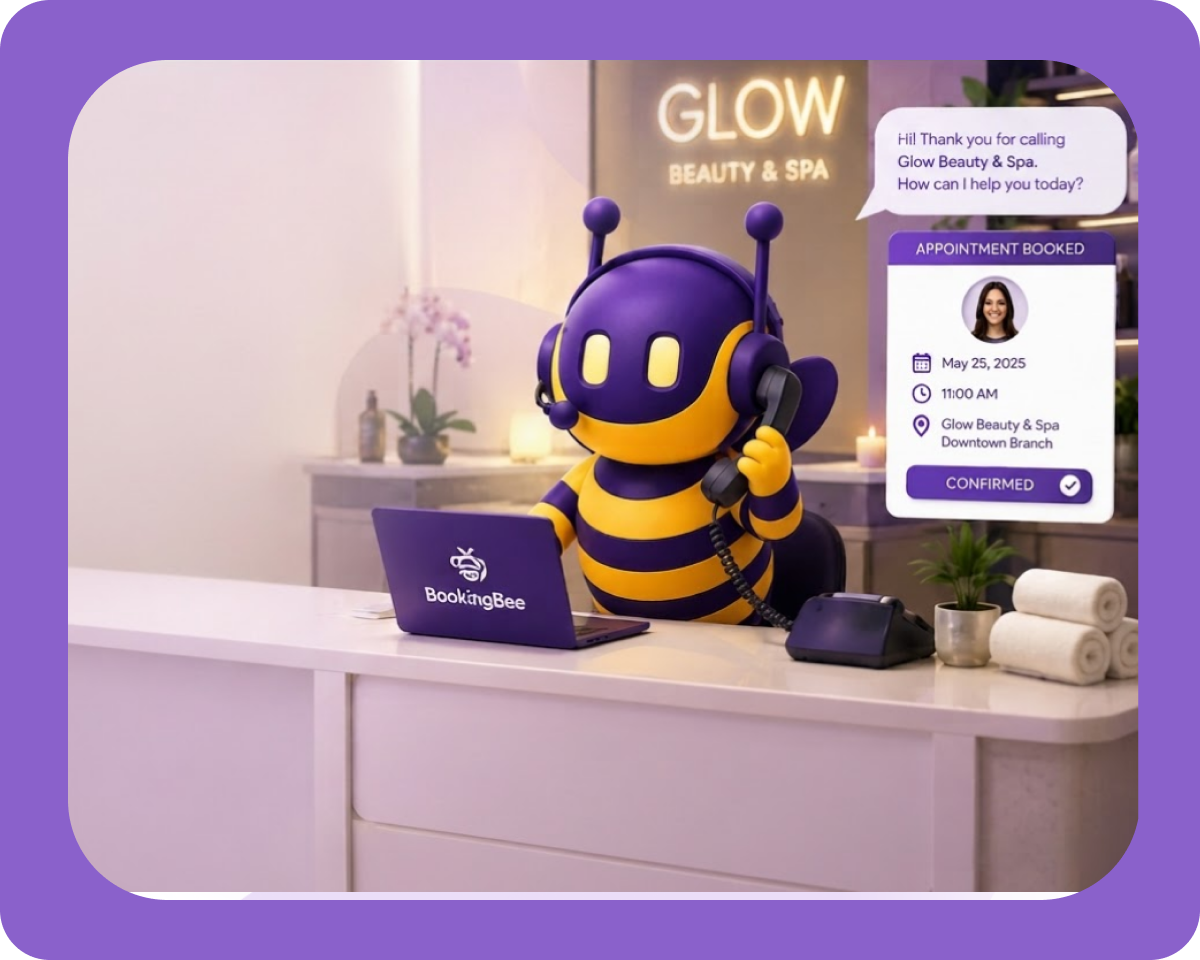
AI Receptionist for Medical and Wellness: Complete Guide
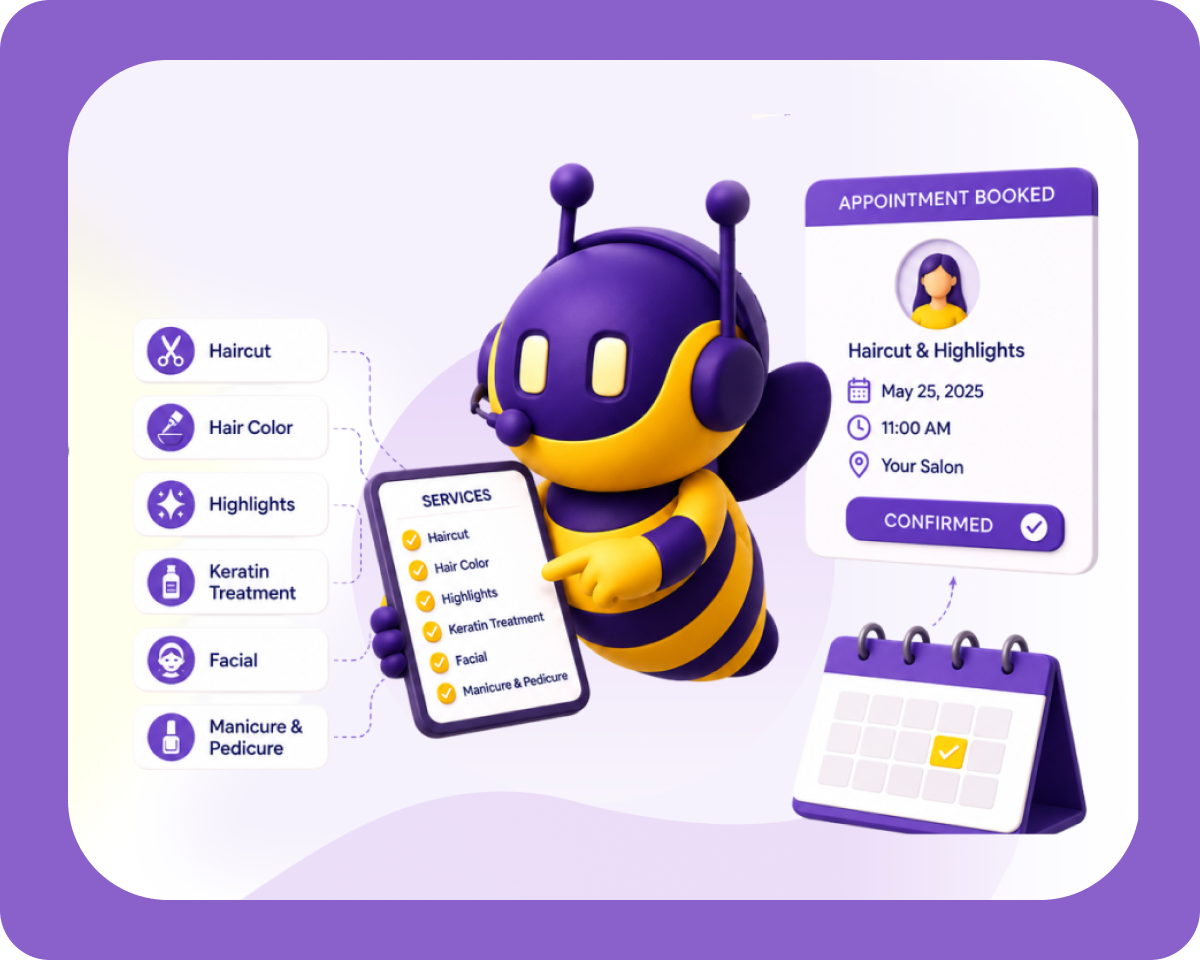
How To Train An AI receptionist On Your Salon’s Specific Services
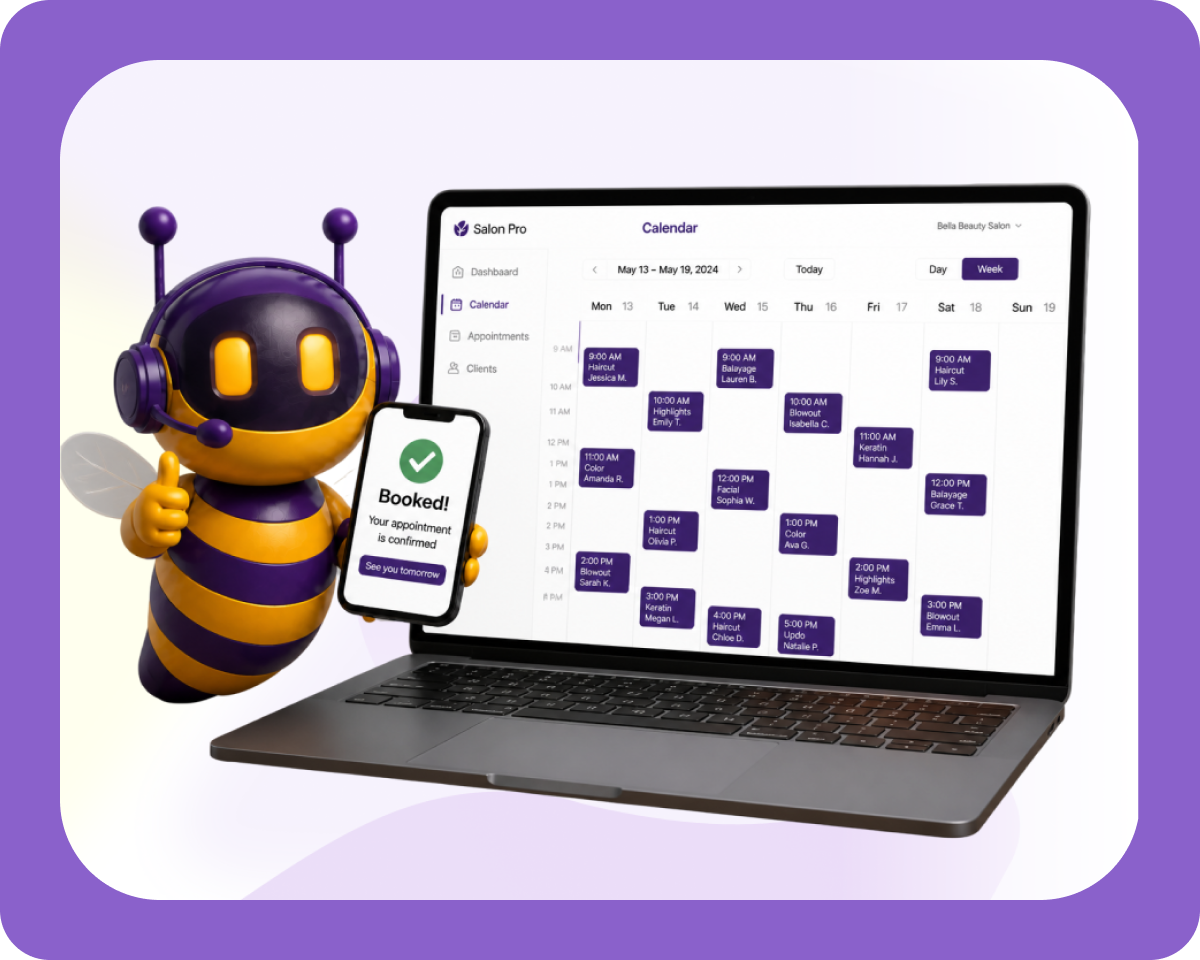
How to Fill Your Salon’s Calendar: Waitlists, Cancellation Recovery
How to Increase Salon Revenue: 10 Strategies That Actually Work in 2026
Latest Blogs
Best practice
September 2, 2026How Salons Generated $1M+ With One Move
Every salon owner is chasing growth. New ads. New offers. New retail shelf. New social posts at midnight. But the salons crossing seven figures didn’t do more. They fixed one…
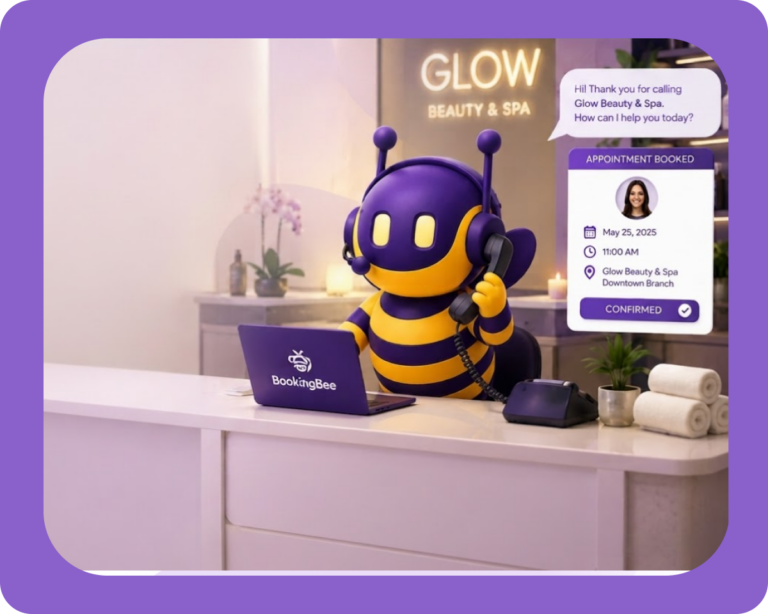
Best practice
August 19, 2026AI Receptionist for Medical and Wellness: Complete Guide
An AI receptionist for medical and wellness practices is a 24/7 conversational voice and messaging tool that automates routine front-desk tasks like booking appointments, answering FAQs, and routing urgent calls.…
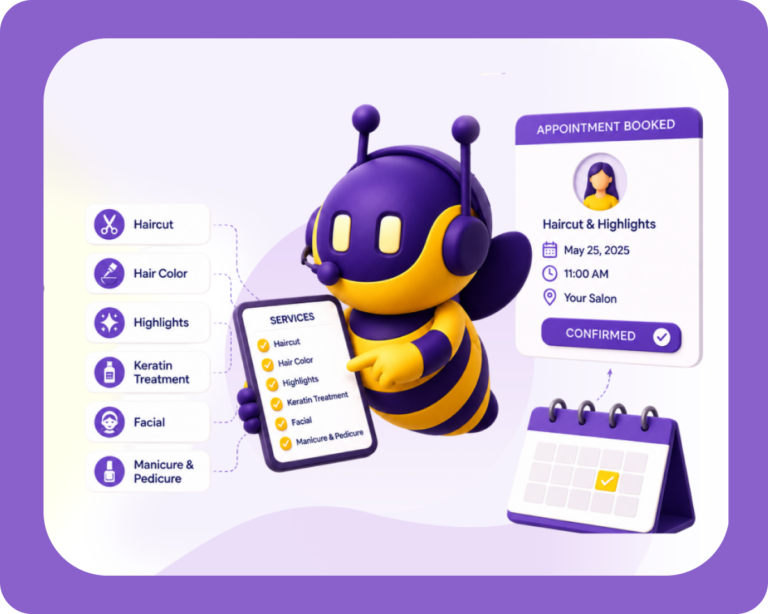
Best practice
July 11, 2026How To Train An AI receptionist On Your Salon’s Specific Services
Every salon runs differently. Your pricing, your stylists’ specialties, your cancellation rules none of that is “one size fits all.” So before you hand off your phone lines to automation,…