

Running a salon means juggling calls, walk-ins, and a packed schedule at the same time. Front desk automation for salons solves this by handling calls, bookings, and reminders automatically, so no client is ever left waiting. This guide breaks down why it matters, how it works, and how to bring it into your salon the right way.
Clients today expect instant replies, not hold music. When your front desk runs on autopilot, every call gets answered, every slot gets filled, and your staff gets their time back. That’s the real value of salon front desk automation.

Why Front Desk Automation for Salons Matters Now
Clients expect instant booking, not busy signals. Salons that respond fast win more repeat business. This is why front desk automation for salons has become a priority, not a luxury.
Client behavior has shifted. People book haircuts and spa visits the same way they order food or a cab: on their phone, in seconds. If your salon can’t answer a call or confirm a slot right away, the client simply books elsewhere.
An AI front desk assistant changes this. It answers calls, texts, and website inquiries around the clock. It doesn’t take breaks, doesn’t put anyone on hold, and never forgets to confirm an appointment. For a salon owner, that means fewer missed opportunities and a front desk that works even when the doors are closed.
Competition adds more pressure. Nearly every neighborhood has multiple salons offering similar services. When pricing and skill are close, the salon with the smoothest booking experience usually wins the client. Front desk automation gives you that edge without adding another staff member to your payroll.
Common Problems Salons Face Without an AI Front Desk Assistant
Missed calls, no-shows, and double bookings drain revenue every week. Most of these problems trace back to one gap: no one is available to manage the front desk full time. An AI front desk assistant closes that gap.
1. Missed calls turn into missed revenue. A ringing phone during a busy blowout or color appointment often goes unanswered. Each unanswered call is a client who may never call back.
2. No-shows disrupt your schedule. Without consistent reminders, clients forget appointments. Empty chairs mean lost income that’s hard to recover.
3. Double bookings frustrate everyone. Manual calendars and multiple booking channels create overlaps. This annoys clients and puts extra strain on your stylists.
4. Staff get stretched too thin. Your receptionist can only handle one client at a time. During peak hours, calls stack up and service quality drops.
5. Follow-ups get forgotten. Thank-you messages, review requests, and rebooking reminders often fall through the cracks when no system tracks them.
An AI front desk handles all five issues quietly, in the background, without adding to your staff’s workload. Salons already using tools like this have shared their experience in our case studies.
How an AI Front Desk Assistant Works for Salons and Spas
How does front desk automation work for salons? It uses AI to answer calls, book appointments, send reminders, and follow up with clients automatically. The system connects to your calendar so every booking updates in real time.
Here’s what happens step by step:
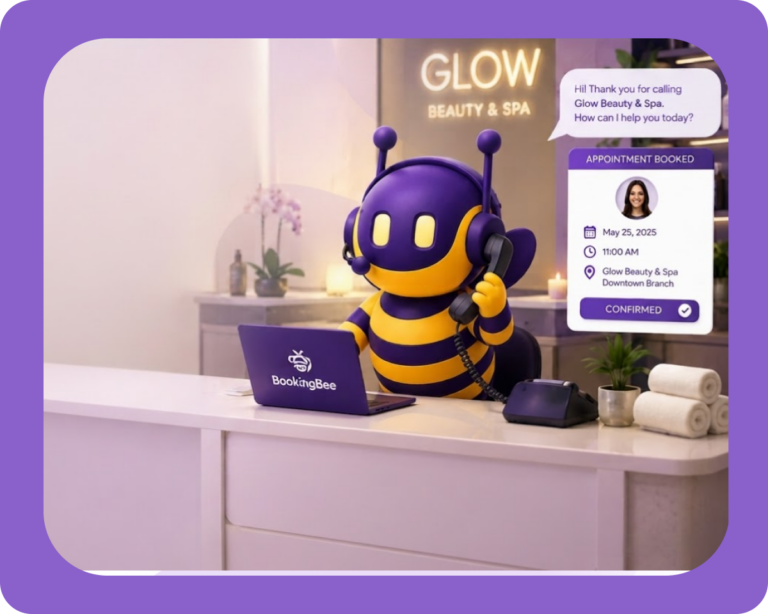
Call handling. When a client calls, the AI front desk assistant picks up immediately. It understands what the client wants, whether that’s booking a service, checking prices, or asking about availability, and responds naturally.
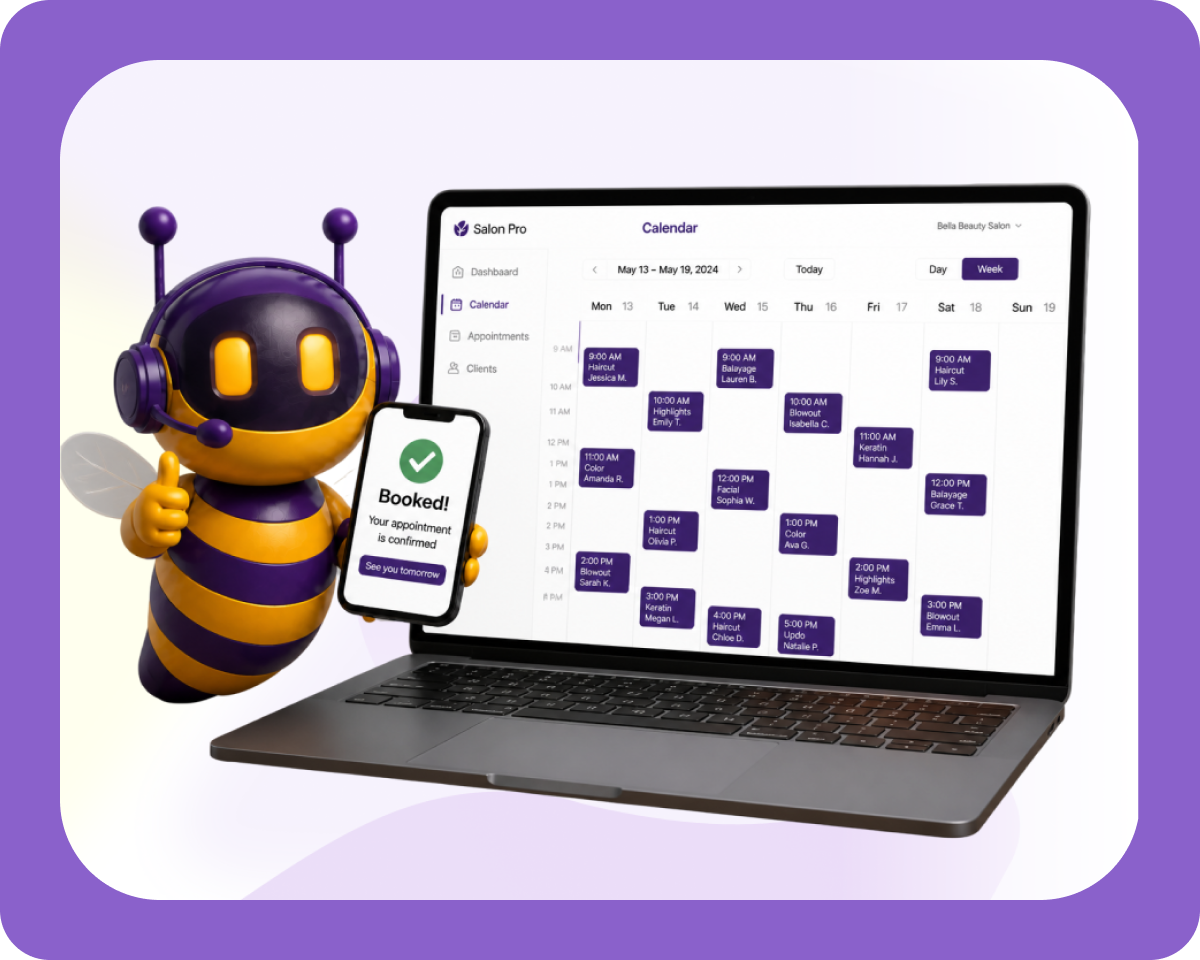
Appointment booking. Clients can book, reschedule, or cancel through phone, text, website, or social media. The system syncs everything to one calendar, so there’s no risk of two clients landing the same slot.
Reminders and confirmations. Automated texts or calls go out before each appointment. This single step is one of the biggest reasons salons see fewer no-shows.
Follow-up messaging. After a visit, the system can send a thank-you note, ask for a review, or suggest the next booking based on the client’s service history.
Smart suggestions. Some tools also recommend add-on services or rebooking dates based on what a client has booked before.
Salons that want more detail on training their assistant to match their specific services can read our guide on how to train an AI receptionist on your salon’s services.
Must-Have Features in a Front Desk Automation Tool
Not every automation tool offers the same value. Look for AI call handling, real-time calendar sync, and automated reminders at minimum. These features directly affect how much time and revenue you save.
AI-powered call handling. The assistant should understand natural conversation, not just scripted menus, so clients feel like they’re talking to a real person.
Real-time calendar integration. Every booking, whether it comes by phone, app, or website, should update your live schedule instantly.
Client history tracking. A good AI front desk assistant remembers past visits and preferences, so your team doesn’t need to ask the same questions twice.
Customizable reminders. You should be able to set reminder timing and message tone to match your salon’s brand voice.
Multi-channel booking. Clients should be able to book through phone, website, app, or social media DMs, all funneling into one system.
Analytics dashboard. Booking trends, cancellation rates, and revenue data help you make informed decisions about staffing and promotions.
Round-the-clock availability. Your front desk should never really close. Late-night bookings matter more than most owners realize, a topic we cover in after-hours salon booking.
Benefits of Front Desk Automation for Salons
Salons using front desk automation see more bookings, fewer no-shows, and happier clients. These gains add up to steady, measurable revenue growth over time.
More appointments booked. Every call and message gets a response immediately, even outside business hours. That alone can noticeably raise your booking rate.
Fewer no-shows. Consistent reminders keep appointments top of mind for clients, which protects your schedule from empty gaps. Our complete no-show playbook goes deeper into this topic.
Better client experience. Fast responses and easy rescheduling make clients feel valued. That satisfaction often turns into loyalty.
Lighter workload for staff. With routine tasks automated, your team can focus on the client sitting in the chair instead of the phone ringing beside them.
Steady revenue growth. More bookings, fewer cancellations, and smart rebooking prompts all contribute to stronger monthly numbers. For more ideas, see our guide on how to increase salon revenue.
Room to grow. Whether you run one location or several, an AI front desk scales with you. You won’t need to hire extra front desk staff as your client list grows.
Salon Industry Statistics That Prove Automation Pays Off
The numbers back it up: salons that automate their front desk grow faster. The U.S. salon industry earns roughly $48 billion annually, with 87% of revenue from repeat clients, making retention key.
71% of salons now use digital booking software, and those who adopted it saw 58% more new clients. Salons without automated reminders see a 20% no-show rate, while automated SMS reminders cut that by 35%. Automated rebooking prompts also boost revenue by 23%.Source: SchedulingKit, 2026
How to Get Started with Front Desk Automation
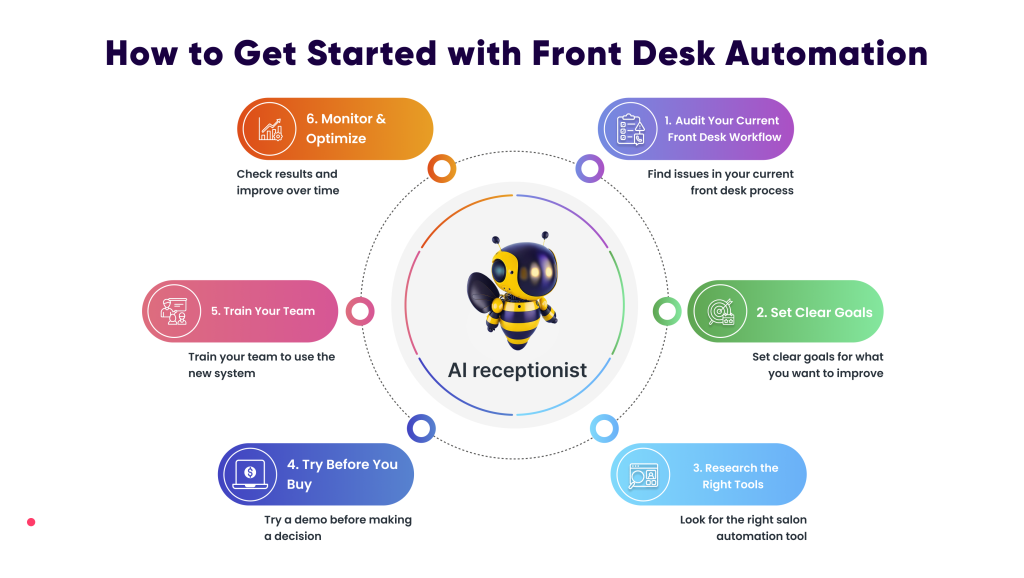
Start by reviewing your current booking process to spot the gaps. Then set clear goals, test a tool, and train your team before going live. A gradual rollout works better than switching everything overnight.
Step 1: Audit your current workflow. Note where calls go unanswered, where bookings overlap, or where follow-ups get missed.
Step 2: Set clear goals. Decide if your main priority is reducing no-shows, increasing bookings, or improving response time. This shapes which features matter most.
Step 3: Research the right platform. Look for tools built specifically for salons, like BookingBee.ai, which handles calls, scheduling, and follow-ups in one system.
Step 4: Test before committing. Use a free trial or demo to confirm the tool fits your existing calendar and client flow. You can schedule a demo here.
Step 5: Train your team. Make sure your staff understands how the system works so they can support clients confidently.
Step 6: Track and adjust. Review analytics regularly. Watch booking rates, no-show trends, and client feedback to fine-tune the setup.
Final Thoughts
Front desk automation for salons is no longer optional in a market where clients expect instant service. From answering calls to sending reminders and rebooking prompts, an AI front desk assistant covers the tasks that used to slip through the cracks. Start small, measure results, and scale as your salon grows.
Frequently Asked Questions
Front desk automation handles appointment booking, rescheduling, call answering, and follow-up messages. It also manages client history, freeing your staff to focus on in-salon service.
Most platforms offer tiered pricing based on salon size and call volume. Many owners find the cost pays for itself through recovered bookings and reduced no-shows.
Modern AI front desk assistants use natural language processing, so conversations feel smooth and human. Most clients care more about getting a fast, accurate response than who or what answers.
Yes. Clients can reschedule or cancel through phone, text, or the booking platform, and the calendar updates instantly to avoid conflicts.
Not usually. It handles repetitive tasks like calls, reminders, and confirmations, freeing your staff to focus on in-person client care rather than replacing them entirely.
 We partnered with BookingBee last December and increased our conversion rate from 27% to 41% in just three months. It helped us capture after-hours calls and made booking easier for busy clients. The AI works seamlessly with Meevo, offering a convenient, flexible experience our clients truly appreciate.

Ready to Automate Your Salon's Front Desk?
Stop losing clients to missed calls and no-shows. See how BookingBee.ai automates your salon's front desk, from booking to follow-up, with a live walkthrough built for your business.
BOOK A DEMORelated Posts
How Salons Generated $1M+ With One Move

AI Receptionist for Medical and Wellness: Complete Guide
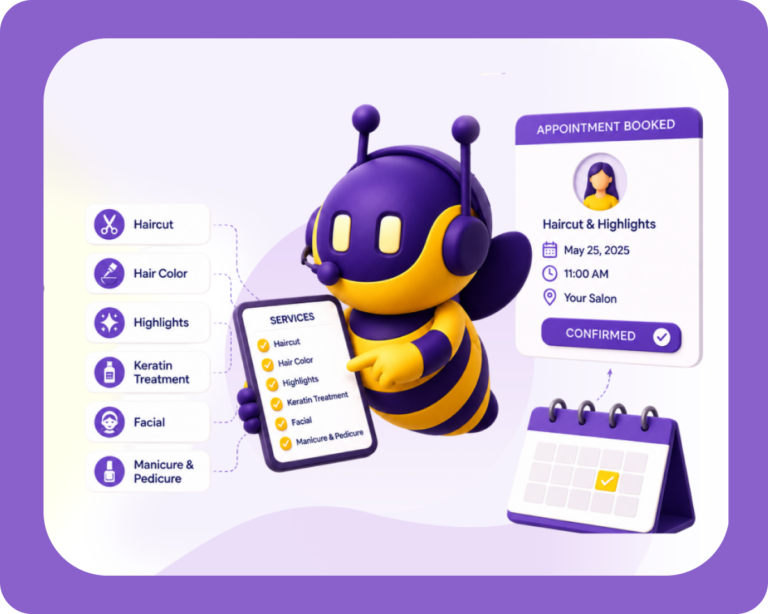
How To Train An AI receptionist On Your Salon’s Specific Services
How to Fill Your Salon’s Calendar: Waitlists, Cancellation Recovery
How to Increase Salon Revenue: 10 Strategies That Actually Work in 2026
Latest Blogs
Best practice
September 2, 2026How Salons Generated $1M+ With One Move
Every salon owner is chasing growth. New ads. New offers. New retail shelf. New social posts at midnight. But the salons crossing seven figures didn’t do more. They fixed one…
Best practice
August 19, 2026AI Receptionist for Medical and Wellness: Complete Guide
An AI receptionist for medical and wellness practices is a 24/7 conversational voice and messaging tool that automates routine front-desk tasks like booking appointments, answering FAQs, and routing urgent calls.…
Best practice
July 11, 2026How To Train An AI receptionist On Your Salon’s Specific Services
Every salon runs differently. Your pricing, your stylists’ specialties, your cancellation rules none of that is “one size fits all.” So before you hand off your phone lines to automation,…